Liquid rocket system built around real test hardware.
Stela I is a work-in-progress experimental liquid rocket project covering propulsion, piston tank, hydraulics, test stand, flight electronics, software and composite structure. My role: project lead / technical integrator, electronics lead and manufacturing coordination.
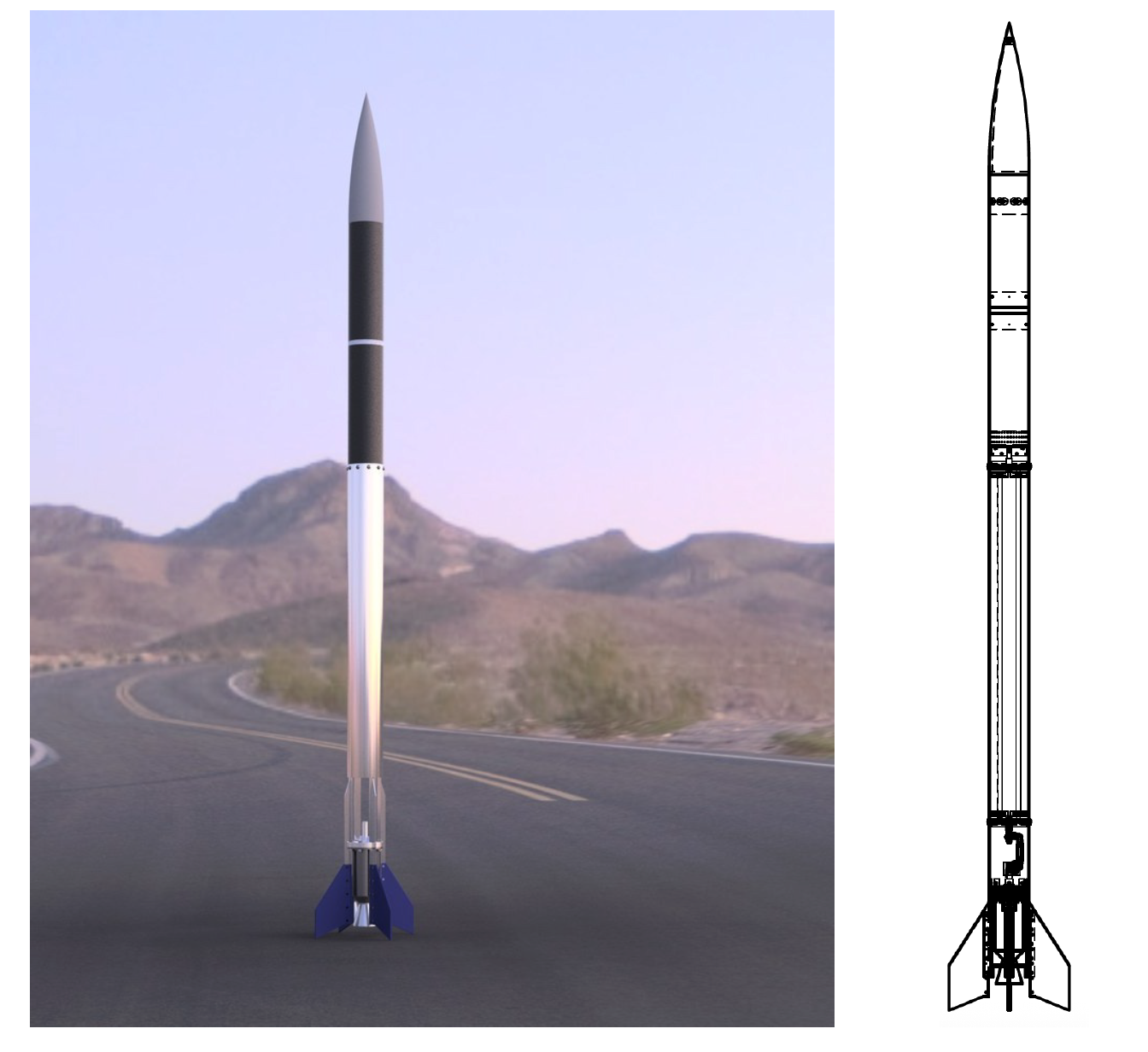

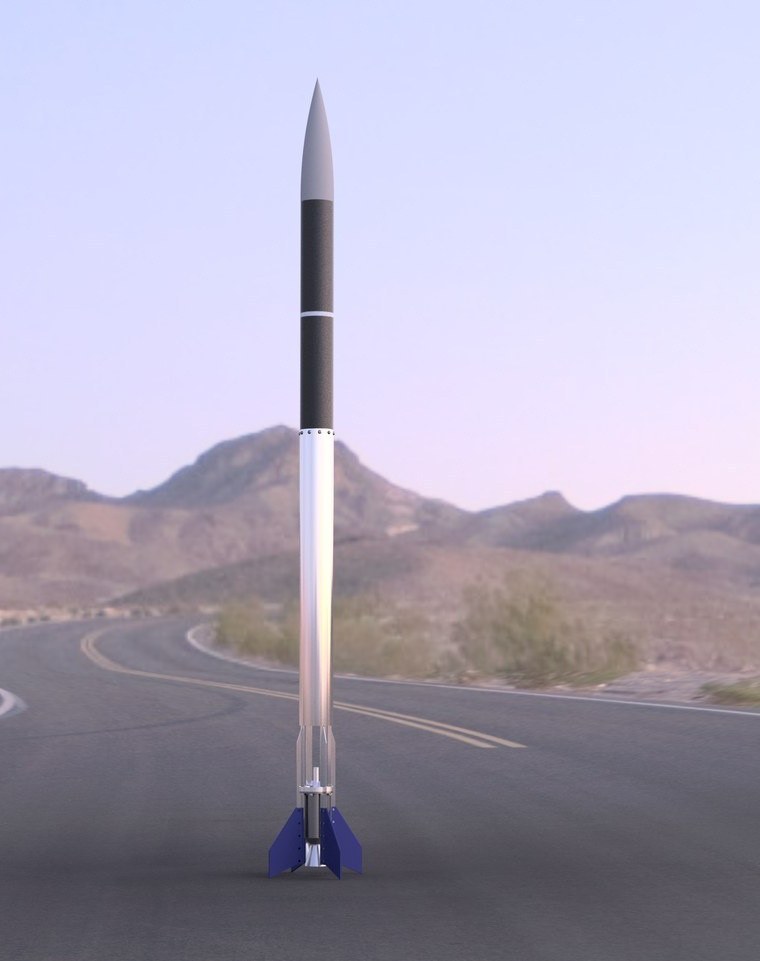
Rocket subsystems and integration.
The project is not only an engine. It is a complete vehicle programme: propulsion, piston tank, fuel system, flight electronics, software, composites and a static test stand.
The engineering route is staged: component tests, static firing on a test stand, then flight integration for Loty Rakiet Eksperymentalnych (Polish experimental rocket flights) and later EuRoC.
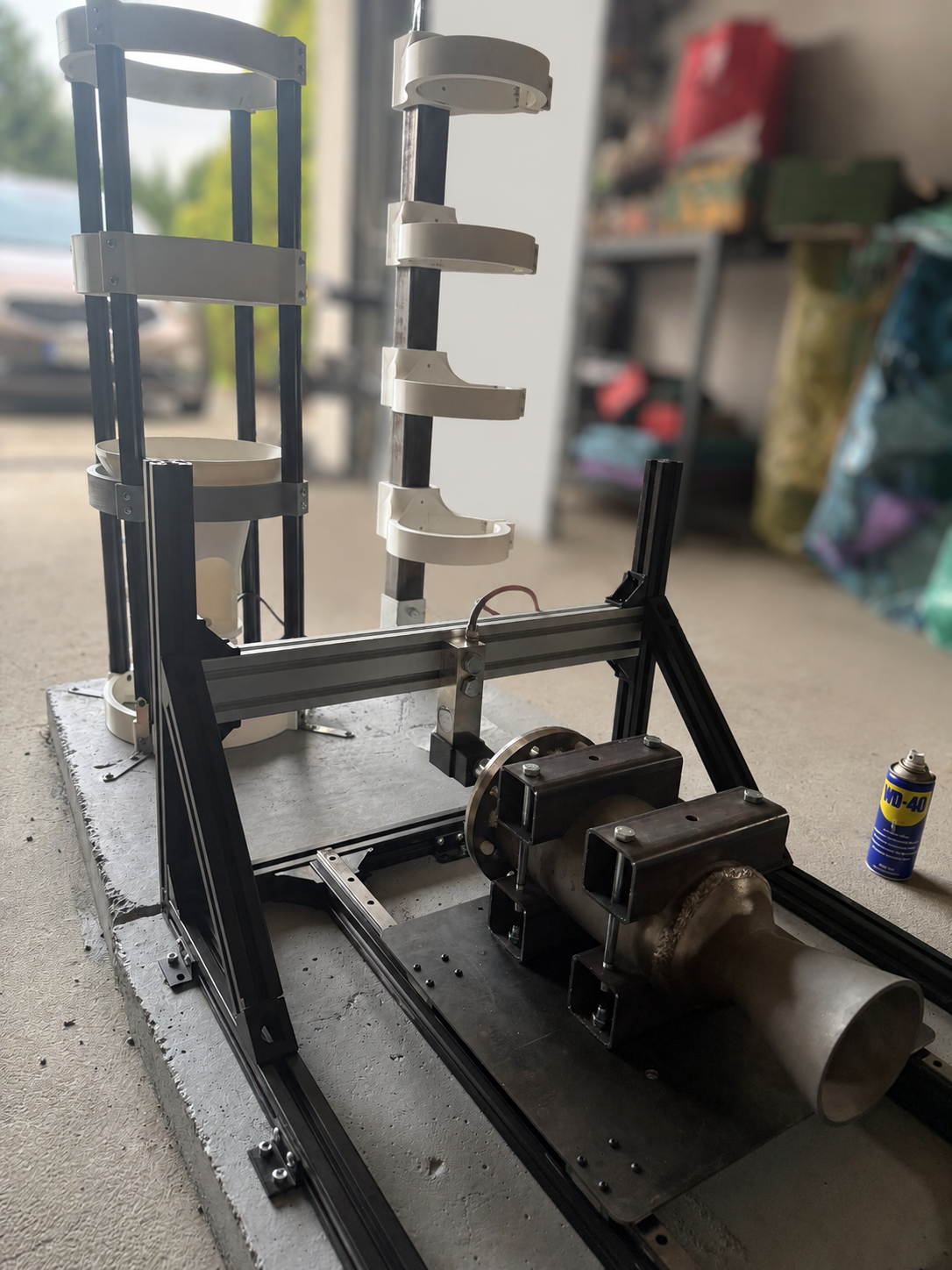
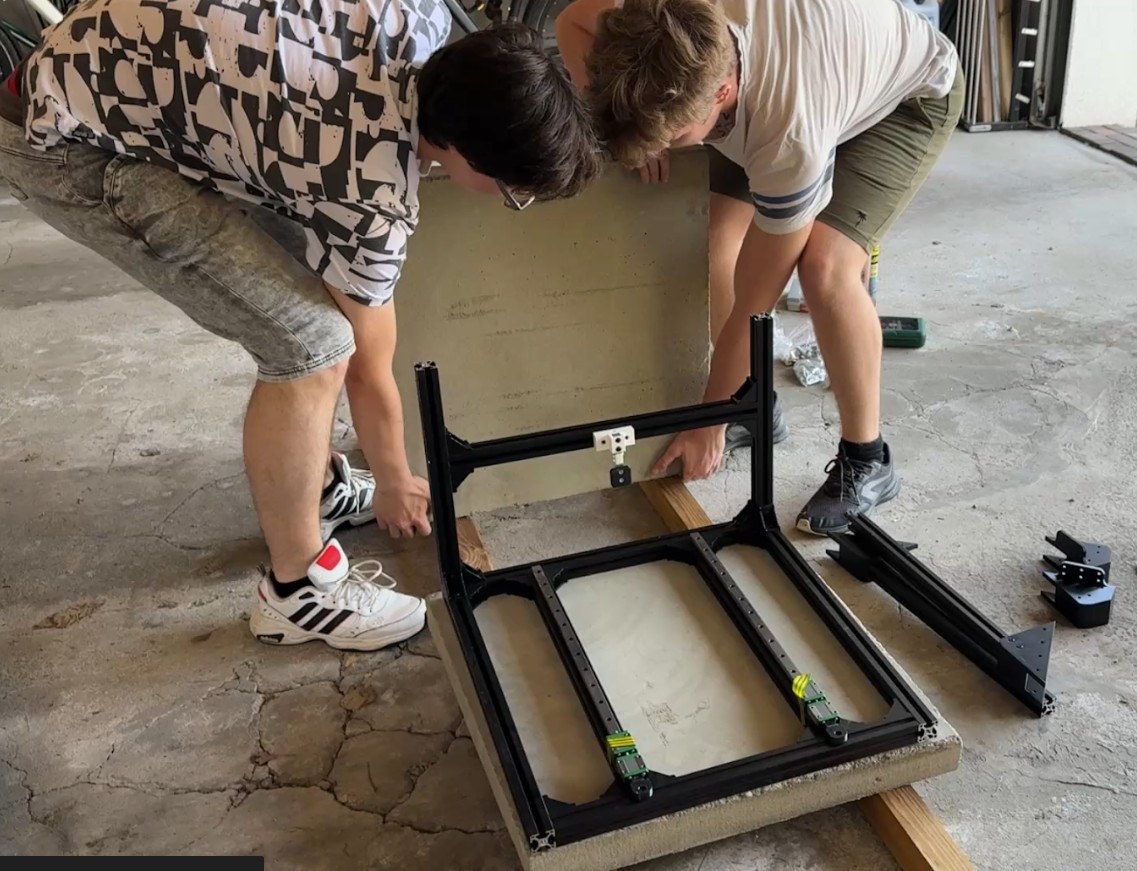
Test stand.
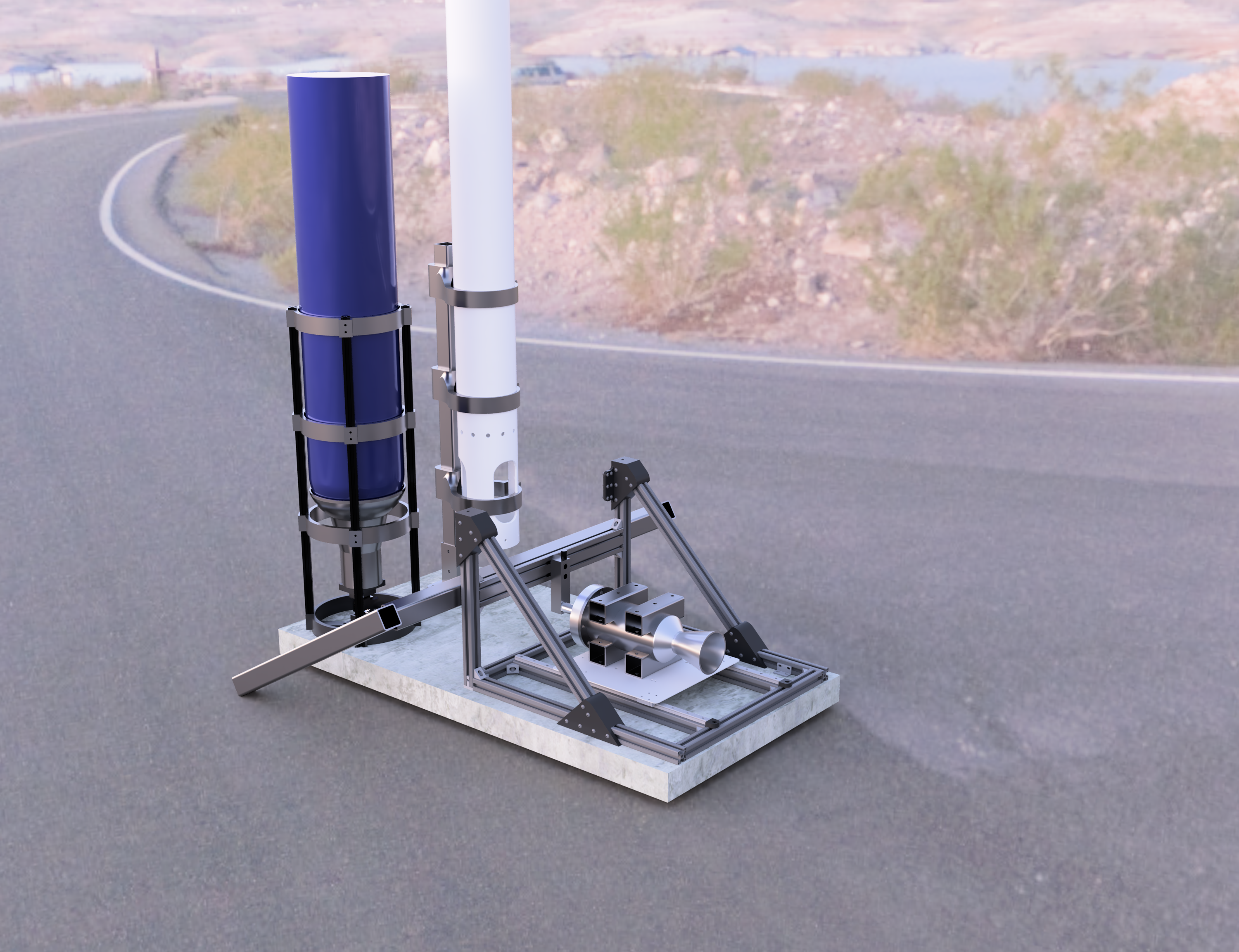
The test stand is designed to hold the propulsion module, measure thrust and pressure behaviour, and make repeated tests possible before integrating the engine into the flight vehicle.
- Rigid frame and guided load path.
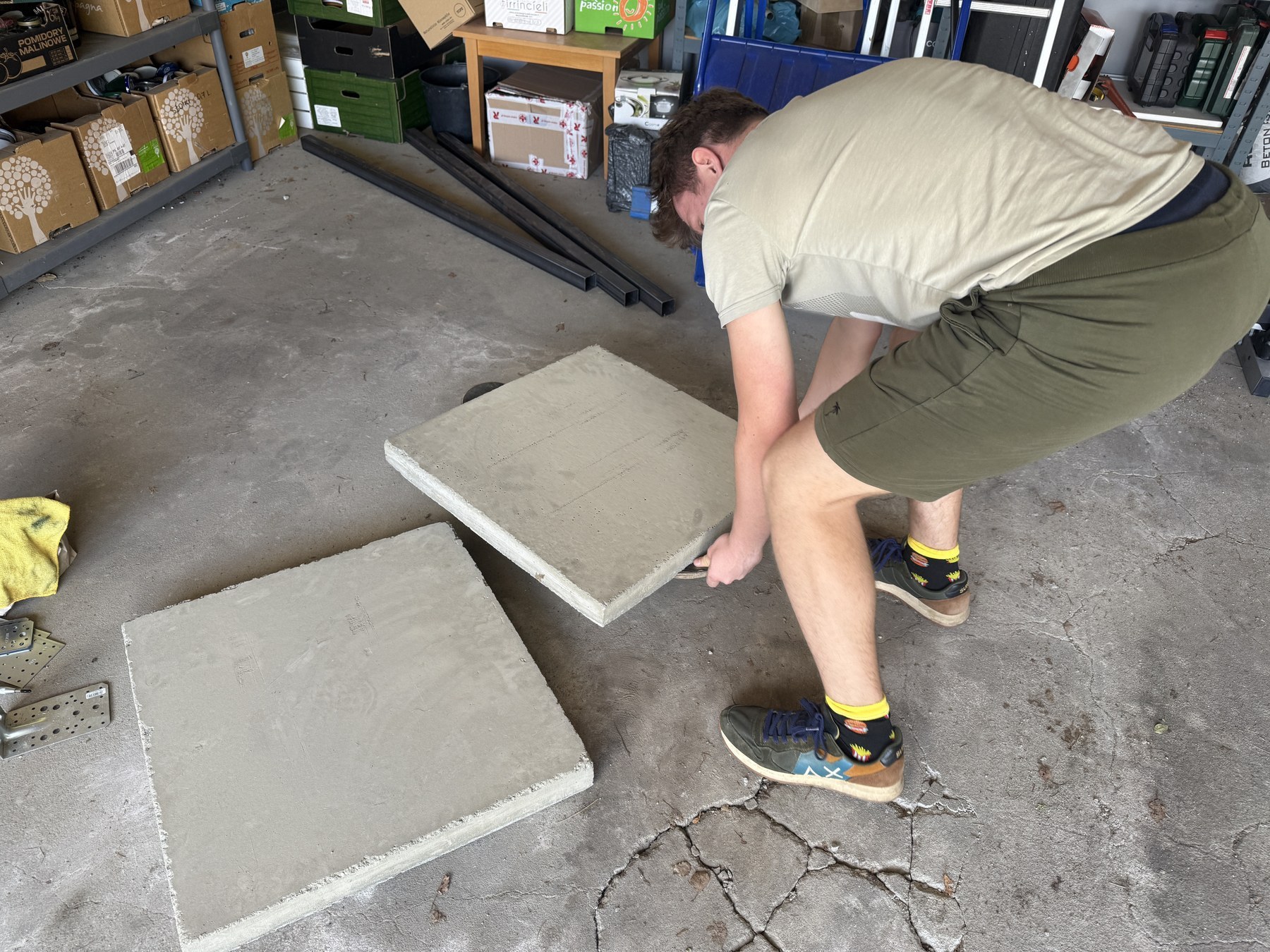
- Concrete ballast and ground anchoring concept.
- Instrumentation planned around thrust and pressure data.
Engine and injector testing.
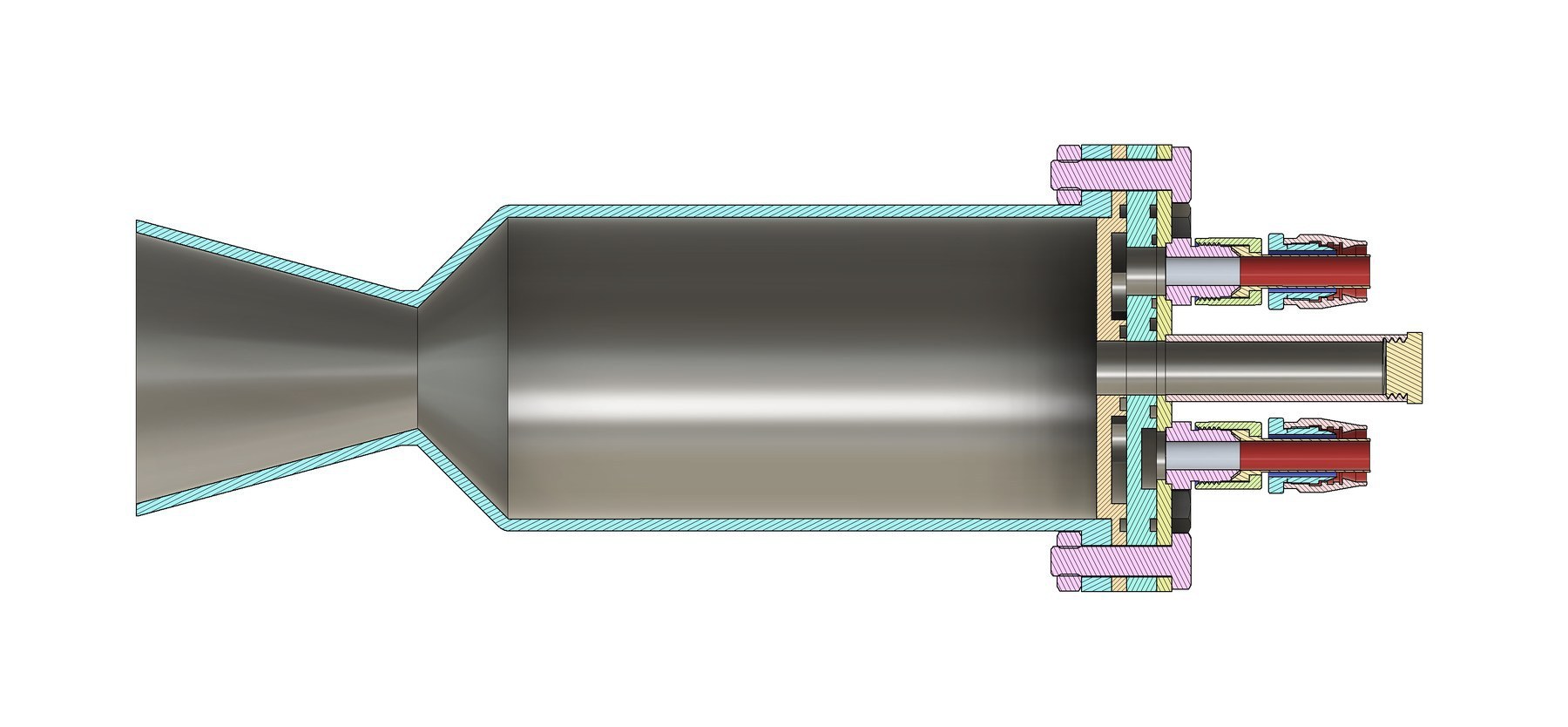
The Szuzałz I engine is being prepared as the main propulsion module. Current work includes chamber integration, injectors, feed-system hardware and static test preparation.
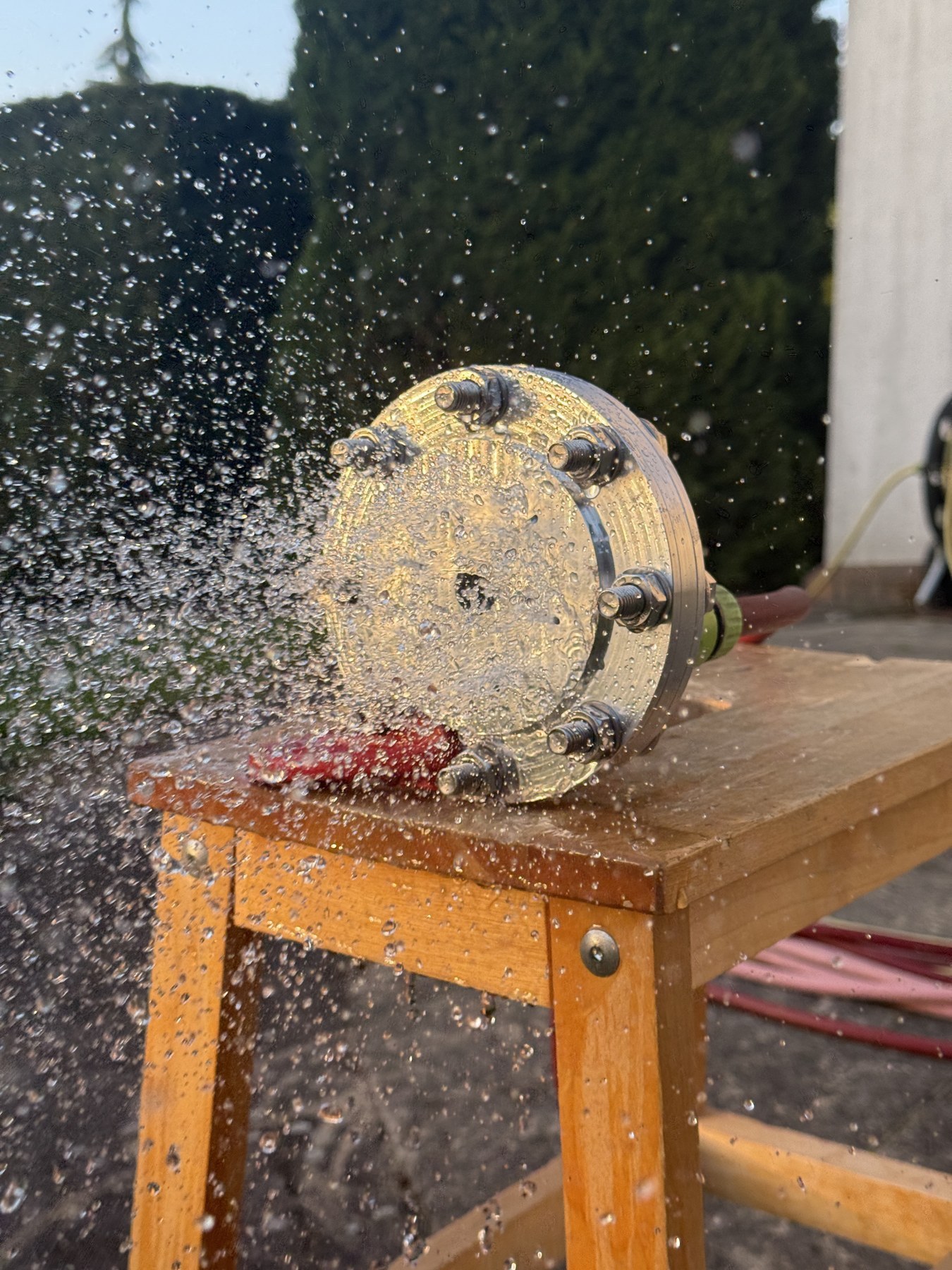
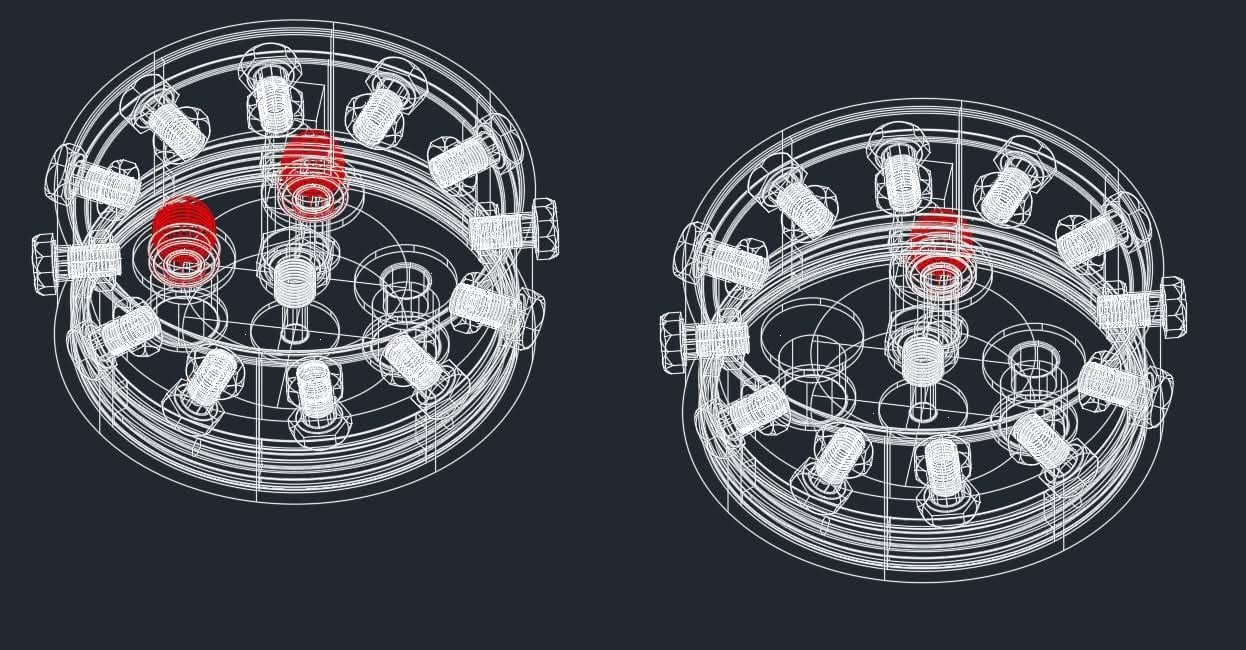
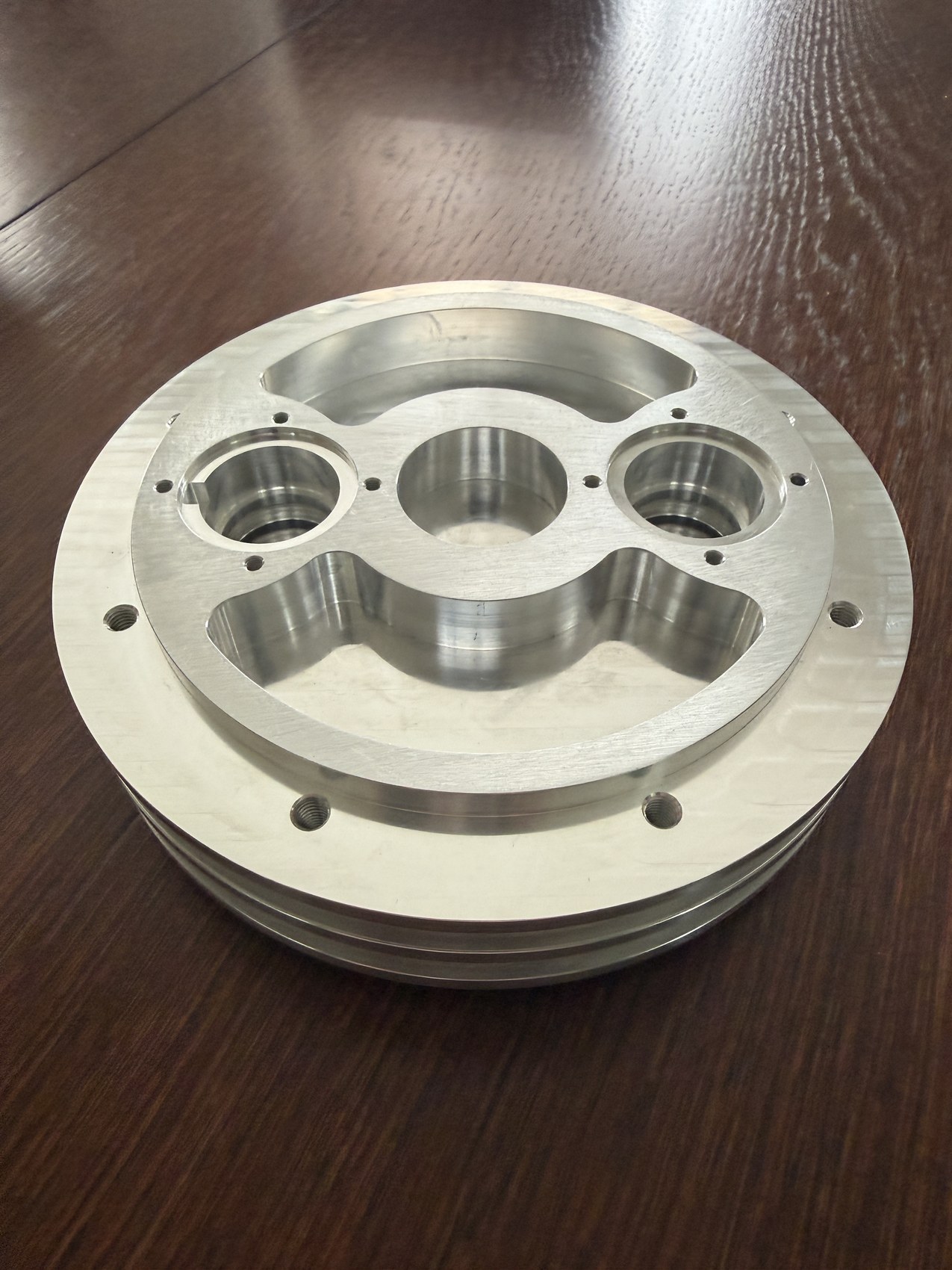
Water tests of injector paths were used to check sealing and flow behaviour on both fuel and oxidizer sides before moving towards final media.

Piston tank and hydrostatic tests.
The tank separates oxidizer and fuel using a moving piston. N₂O self-pressurisation produces around 55 bar expected internal pressure, and the piston transfers pressure to the fuel side while keeping the media separated.
The first tank version uses aluminium 6061-T6. A fully composite tank is planned as the next version.
Hydraulics, valves and quick disconnect.
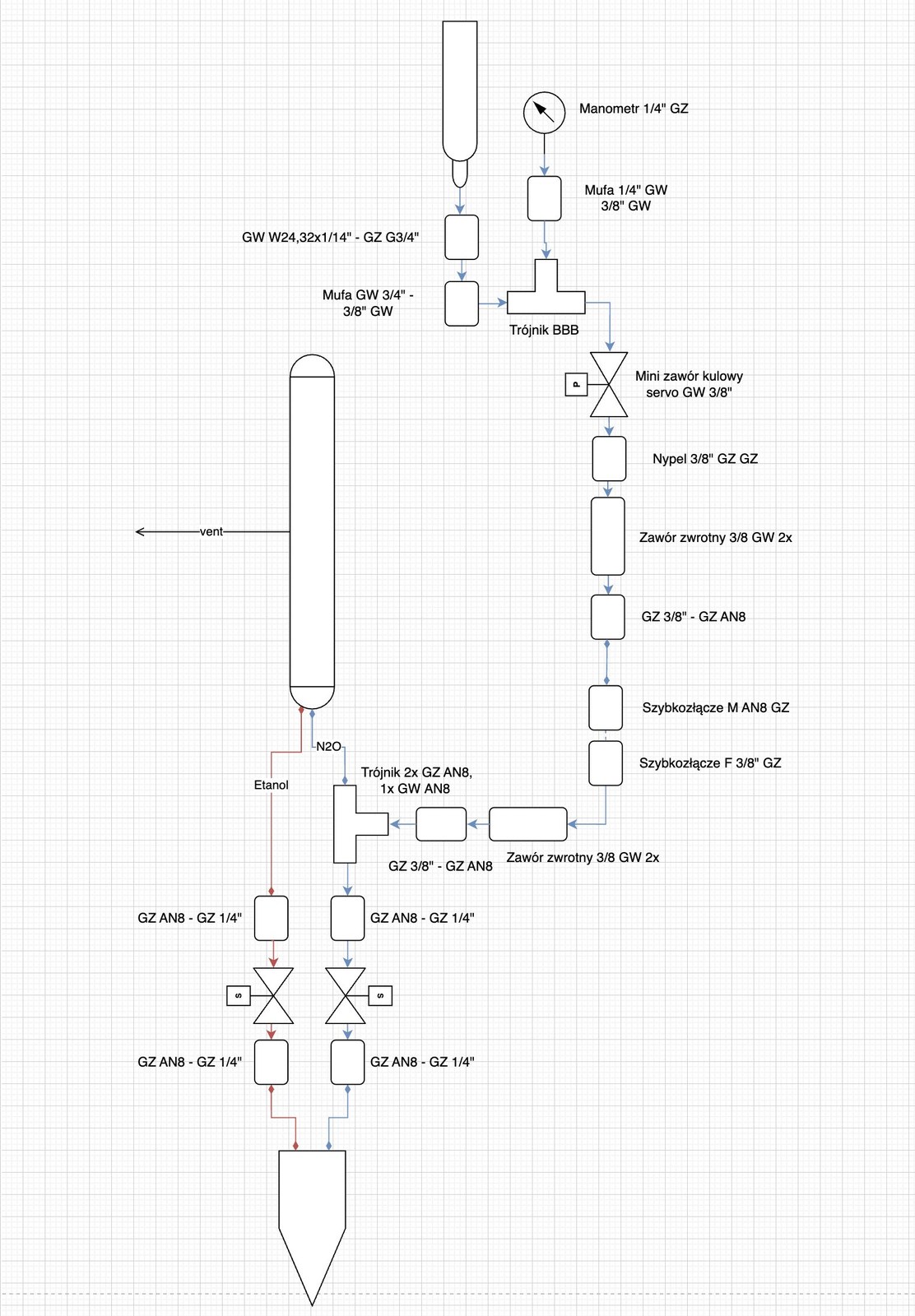
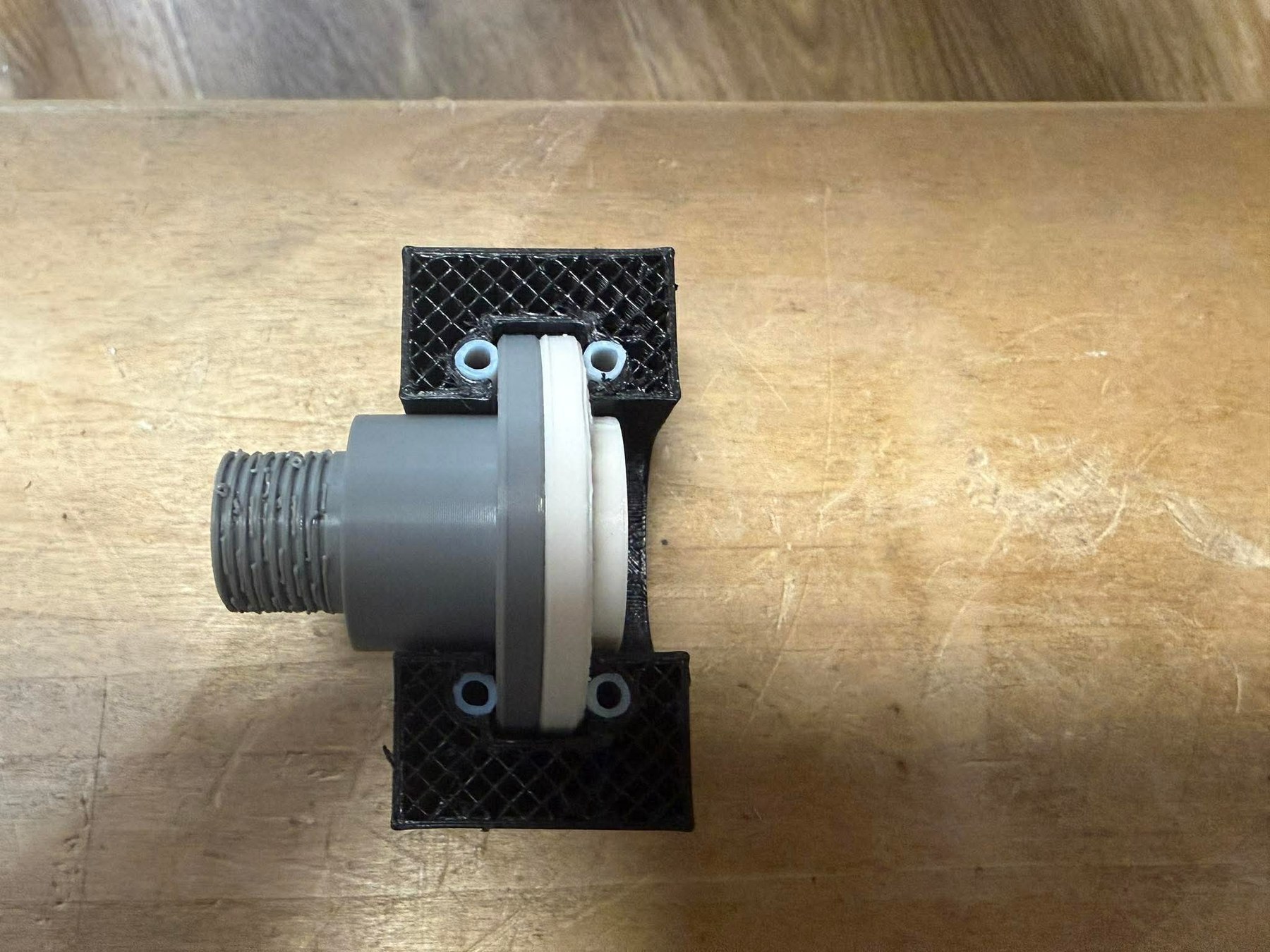
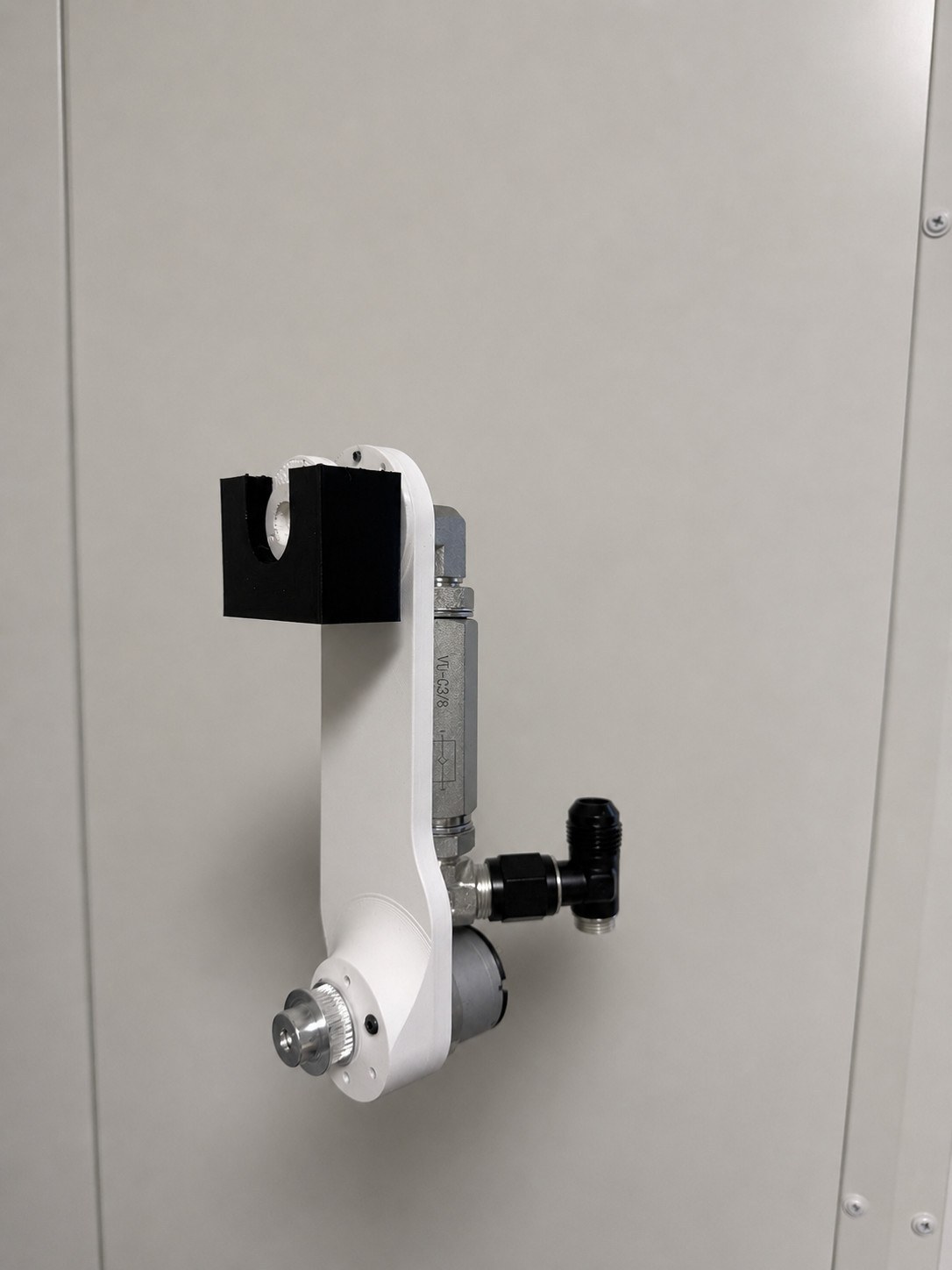
The feed system covers propellant lines, valves, filling, venting and safe separation from ground equipment. The quick disconnect is held by a clip released remotely using a DC motor; after release, line pressure throws the connector away from the rocket.
Electronics and control.
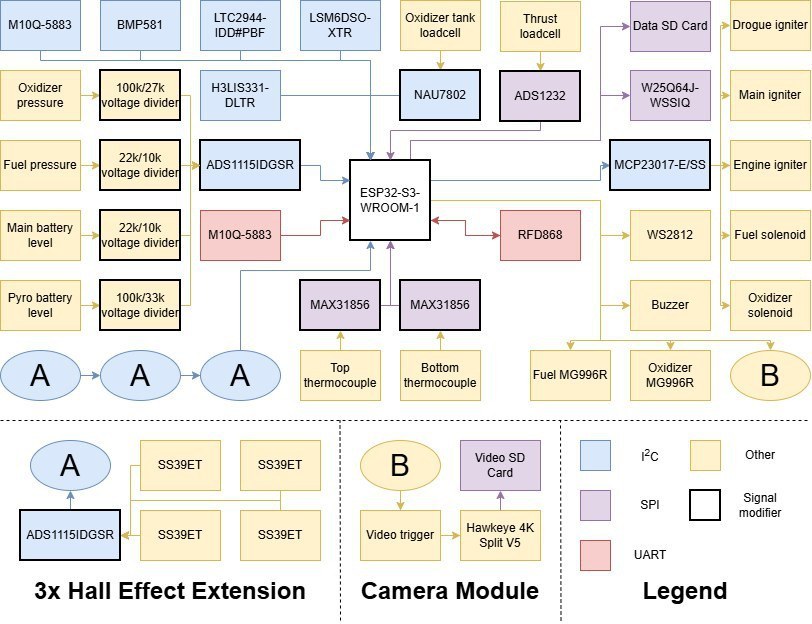
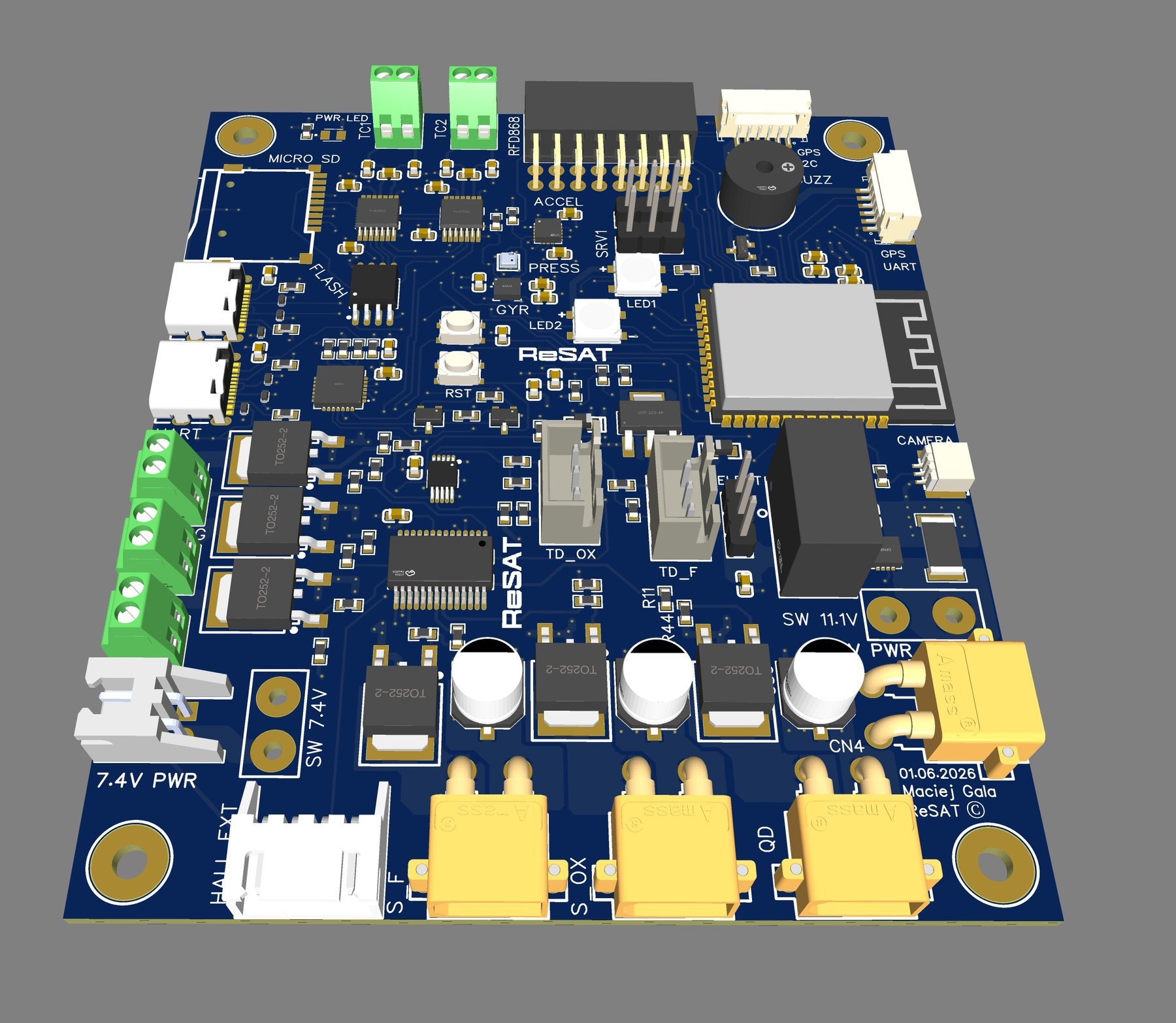
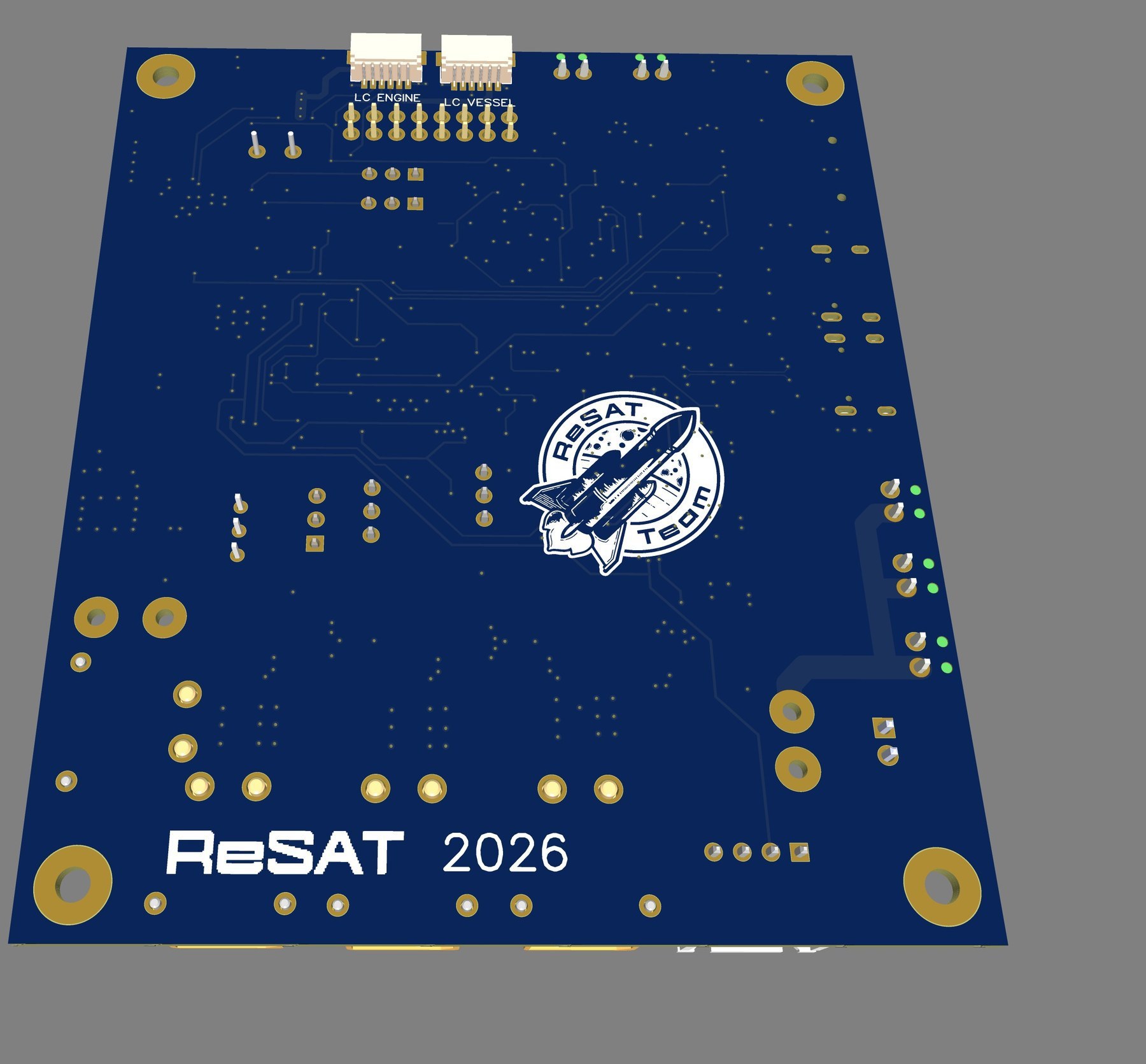
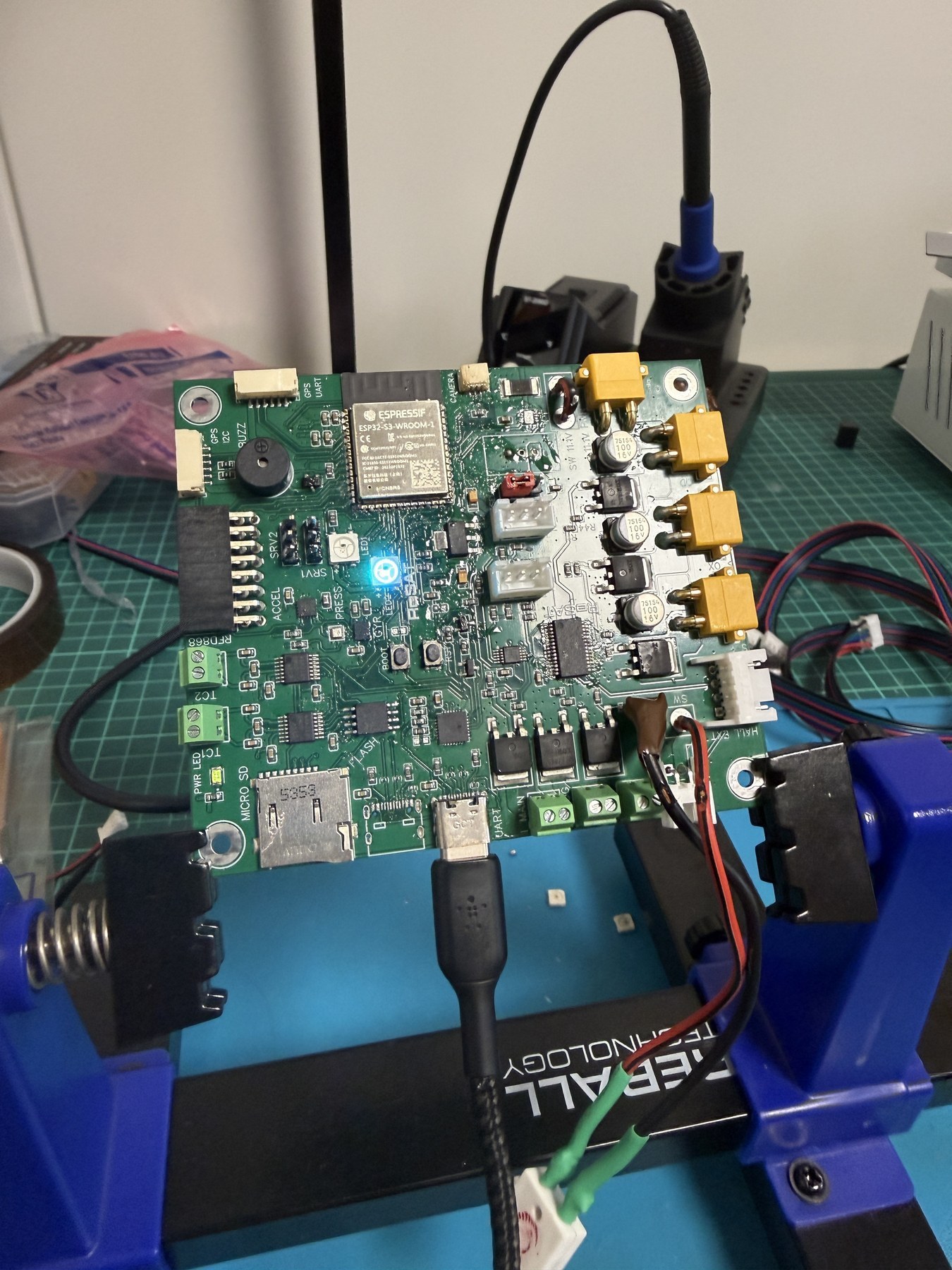
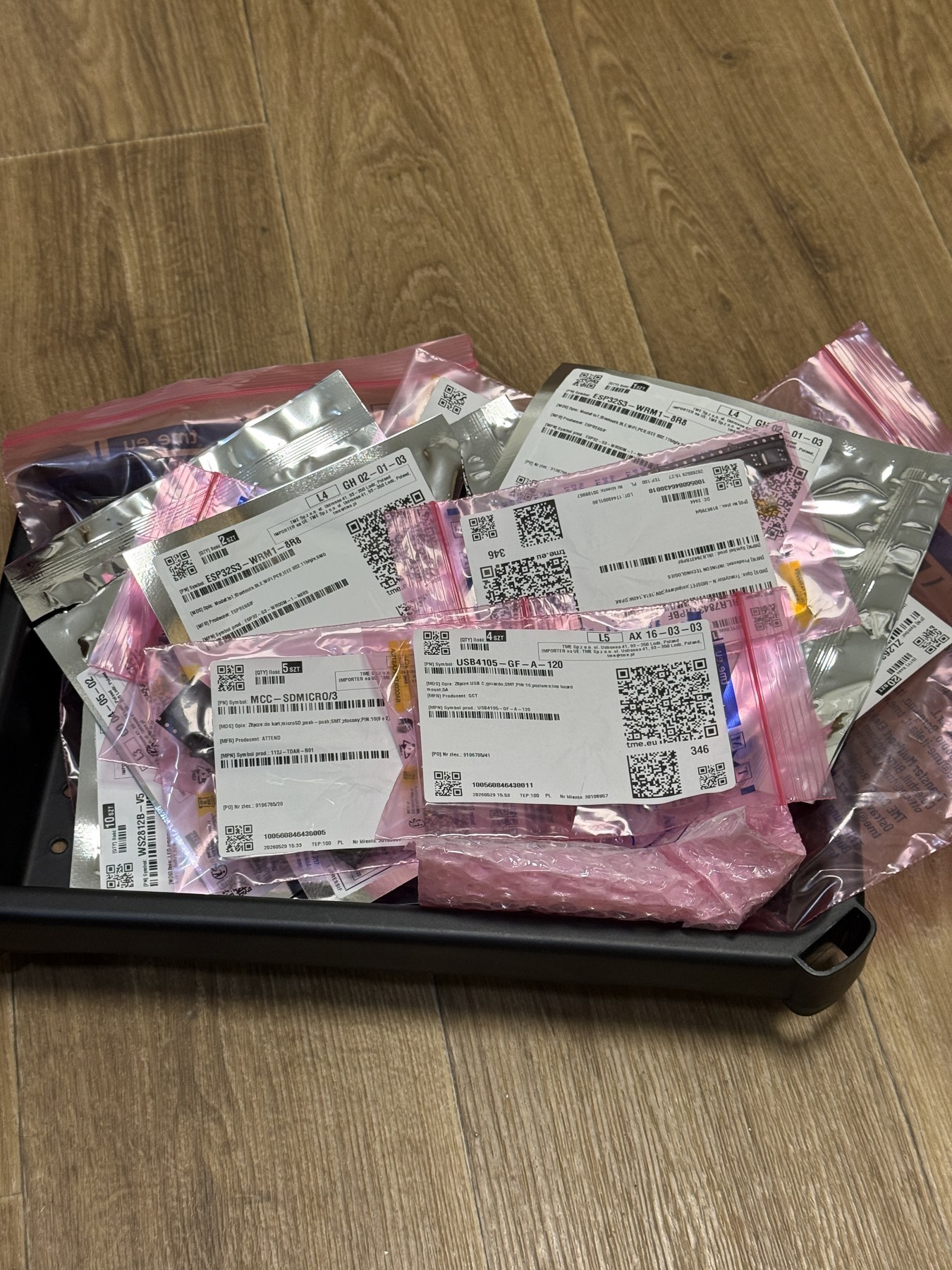
The electronics measure fuel and oxidizer pressures, thermocouple temperatures, thrust/load-cell data, acceleration, orientation, altitude, battery voltages and GPS data. They also control solenoid valves, engine ignition, recovery charges, the quick-disconnect release motor, signalling and test modules.
The PCB project is linked publicly through OSHWLab and is included as a direct CTA on this page.
Composites and structure.
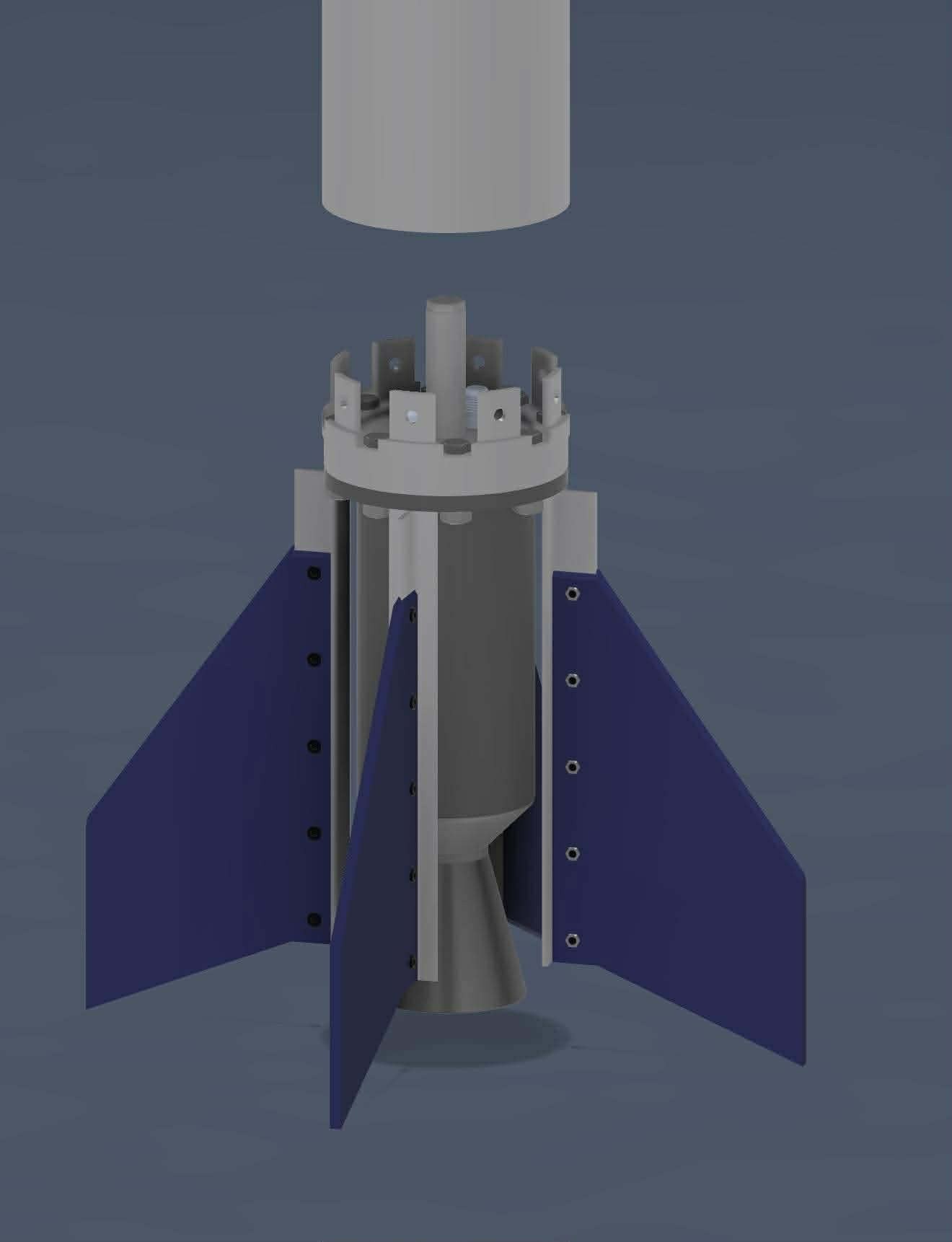
The structure uses a composite nosecone, two 0.5 m composite body tubes and fins. A later carbon-fibre tank concept is being evaluated as a major mass-reduction direction.
The project is currently collaborating with WB Group, the largest private defence company in Poland, especially around composite structure and manufacturing support. Partner support is important because composite flight hardware requires process control and external expertise.

Sponsors and partners.
Project support covers funding, materials, technical consultation, composite manufacturing support, electronic components and local backing.