Automatic build plate swapper for 3D printer farms.
A real, built automatic build-plate swapper for 3D printers. I designed and built the mechanical system, electronics, firmware, testing setup and documentation, from the frame and motion system to the control box and simple web interface.
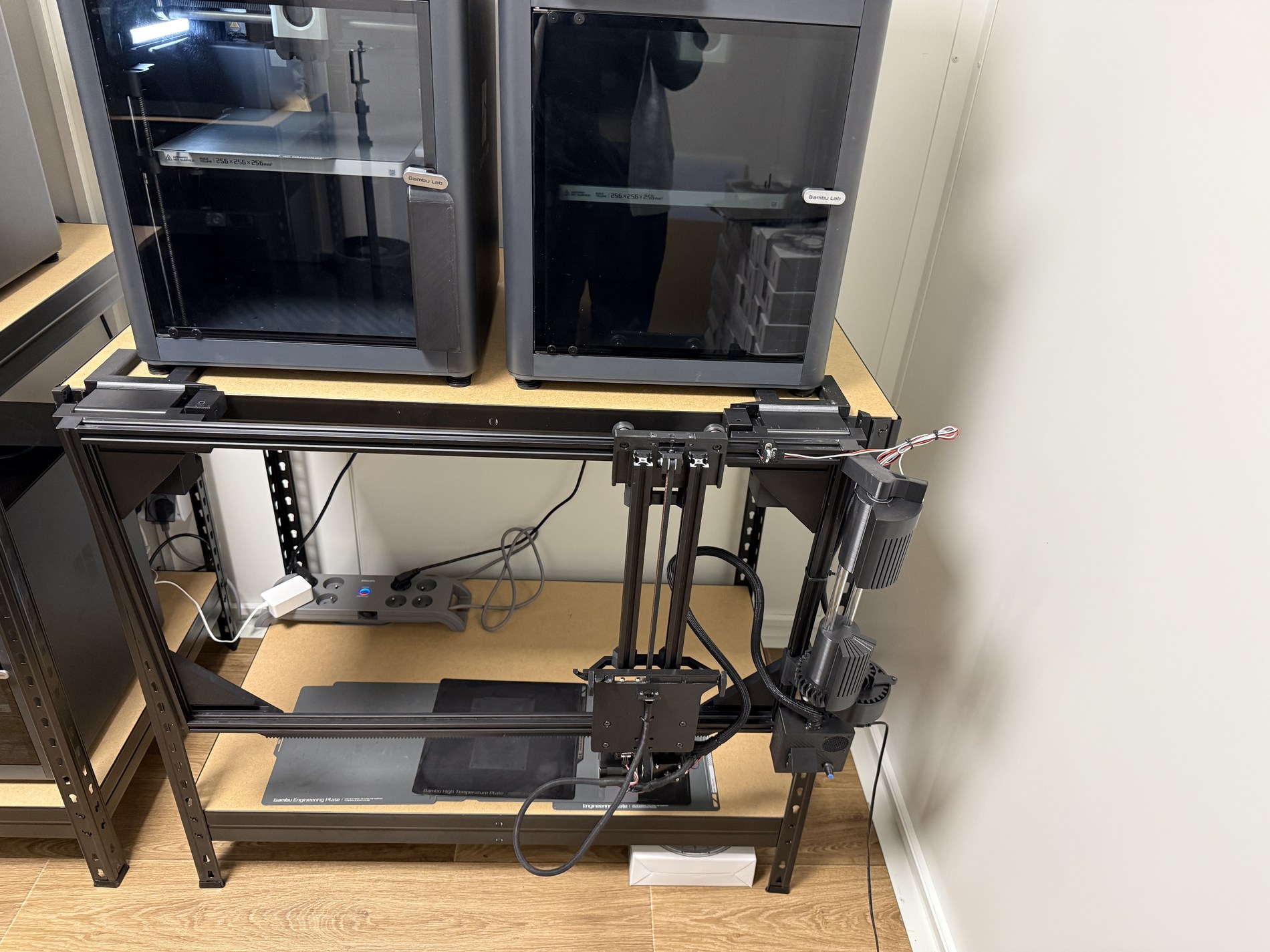
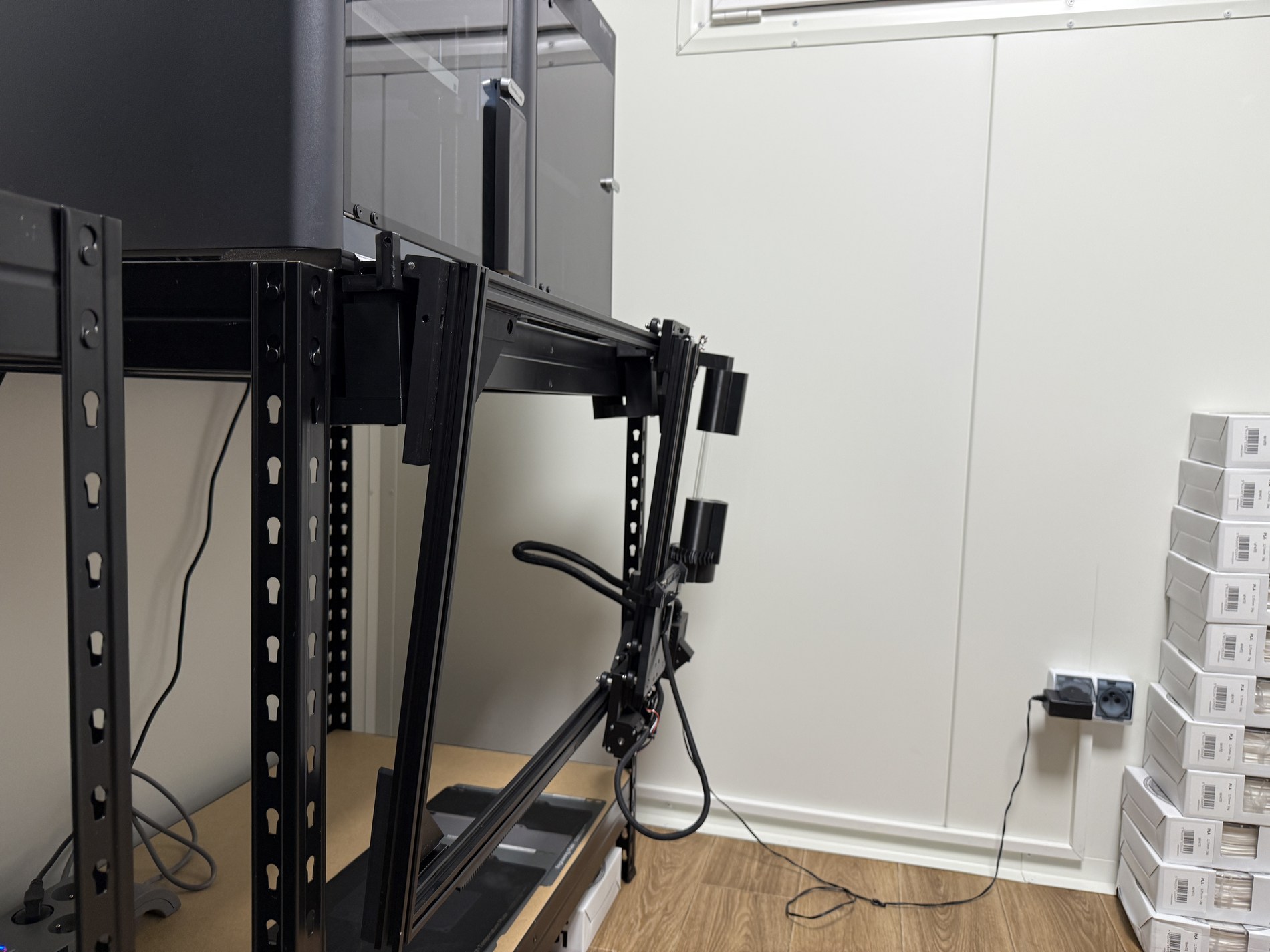
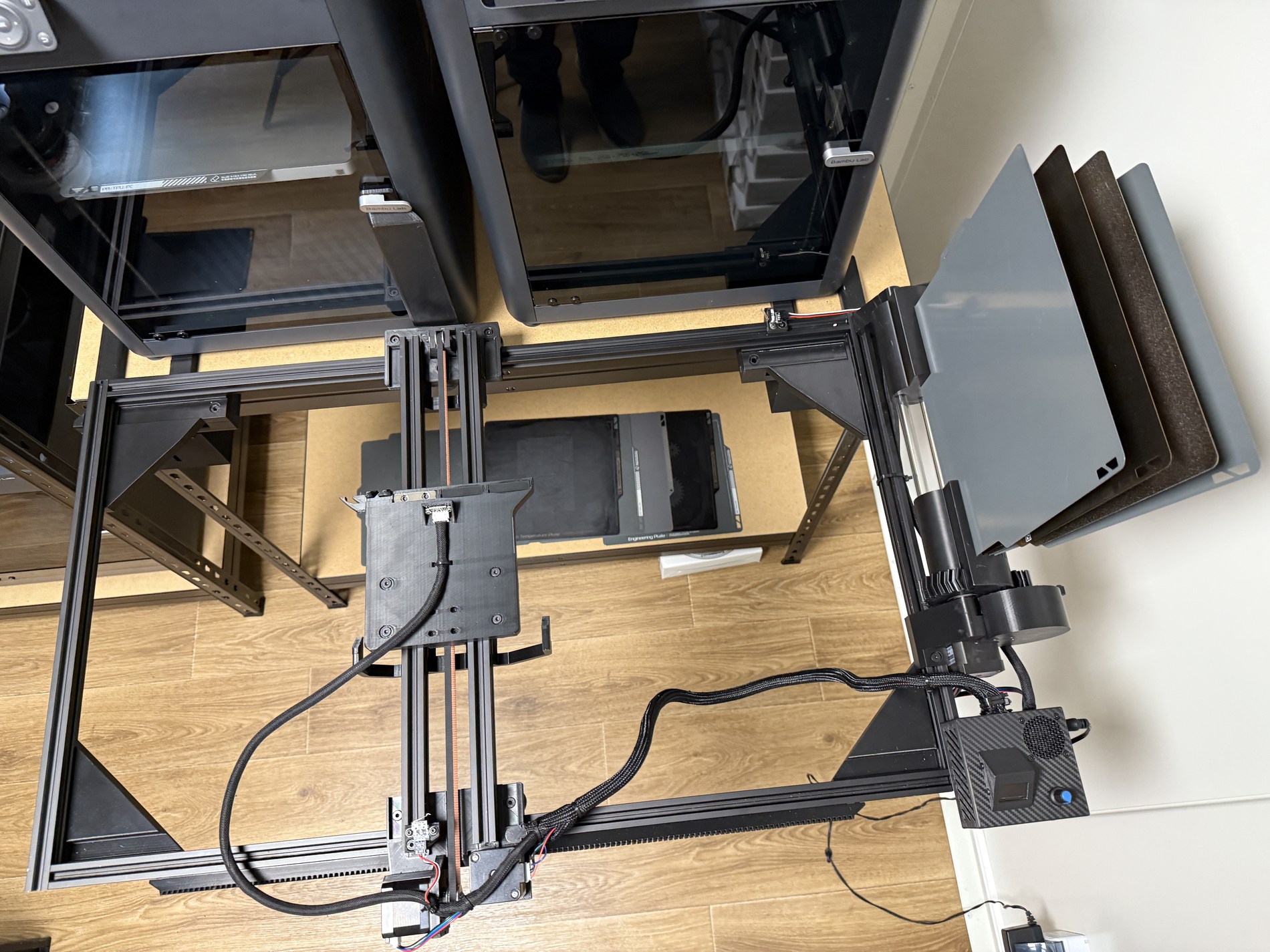
Physical prototype.
The project was created to reduce manual work in a 3D printer farm. Instead of swapping plates by hand after each print, the mechanism can store, position and exchange plates using a modular frame, a moving carriage and a plate magazine.
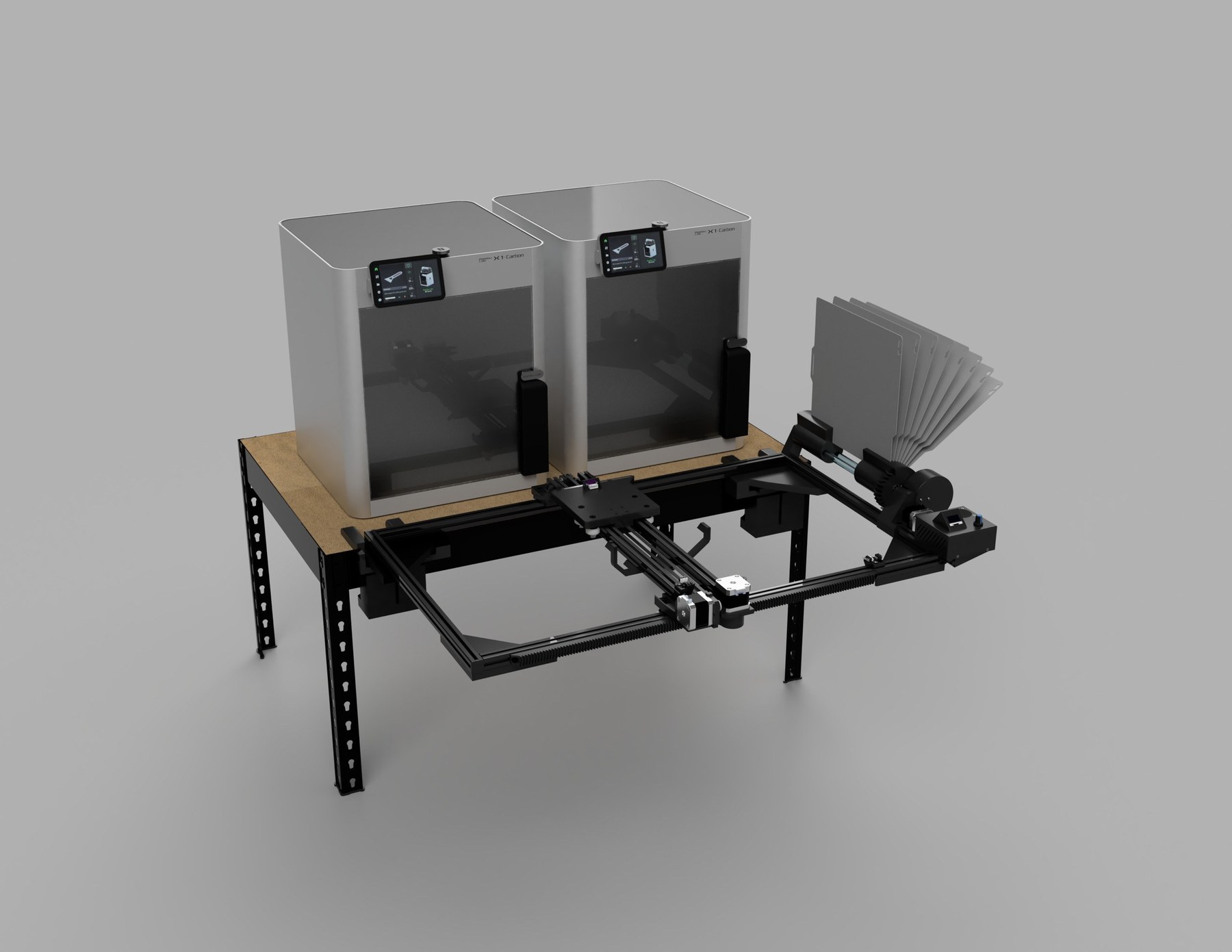
CAD design and physical debugging.
The render is shown here only once as design context. The mechanical architecture was then translated into aluminium profiles, printed brackets, belt/rack motion, V-Slot rollers and a moving head responsible for picking up and installing build plates.
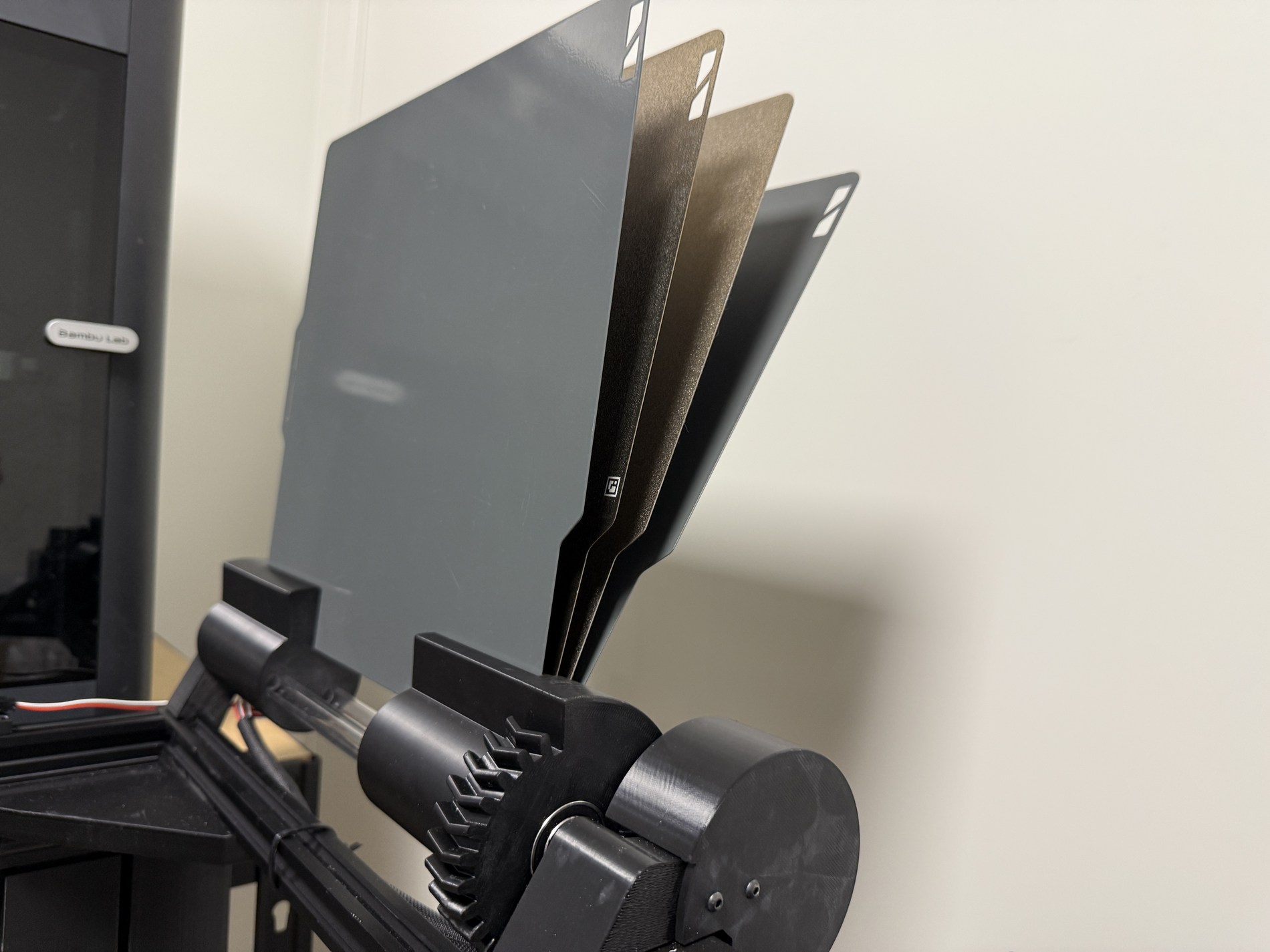
Plate storage magazine.
The magazine stores multiple platforms in a compact fan-style geometry. The idea was to let a print farm run longer without operator intervention by keeping spare clean plates ready next to the printer.
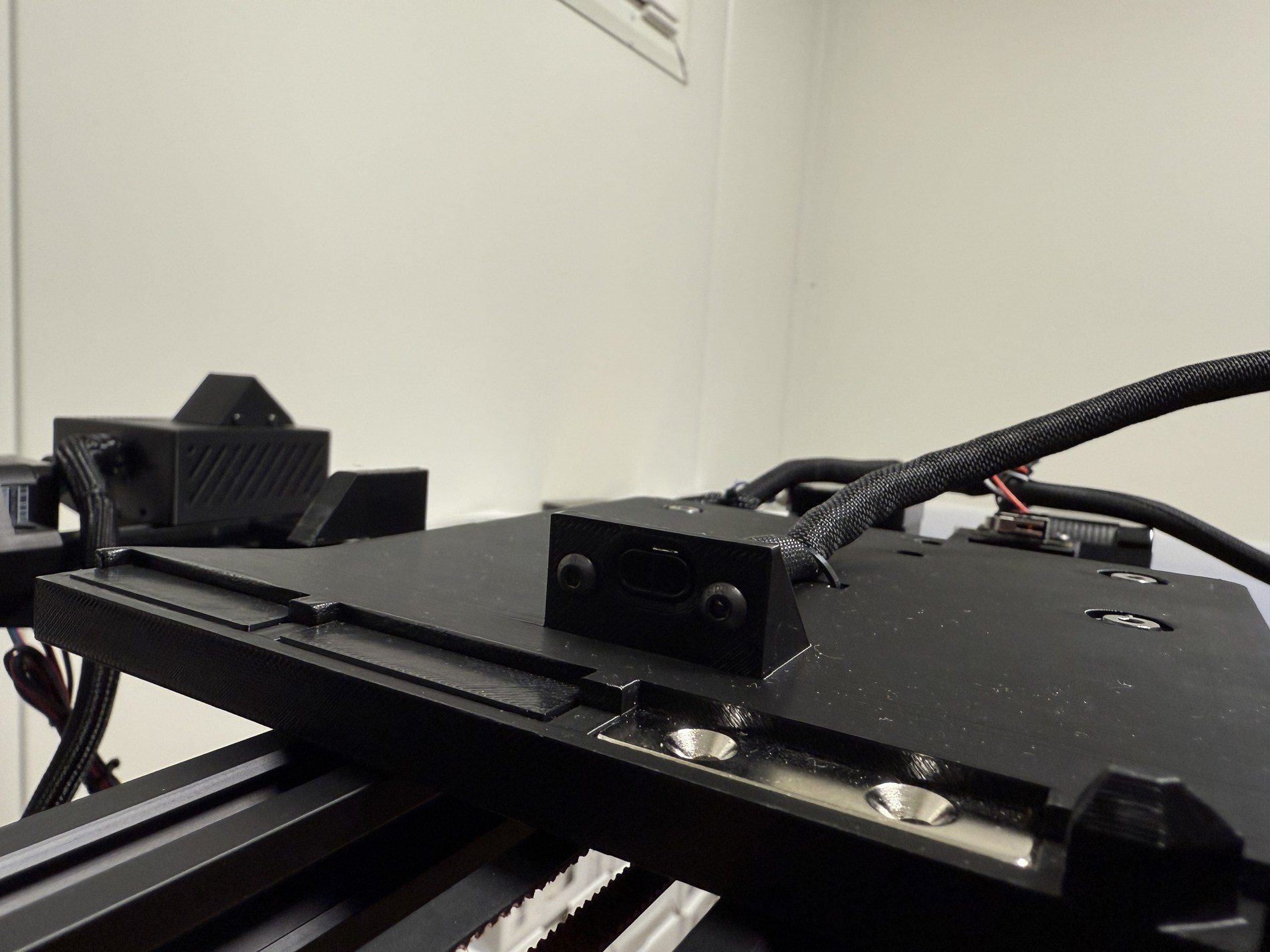
Moving head and sensing.
The moving head handles the physical interaction with the plate. Position feedback and sensing were important because the device had to align with a printer and magazine repeatably, not just move approximately in open loop.
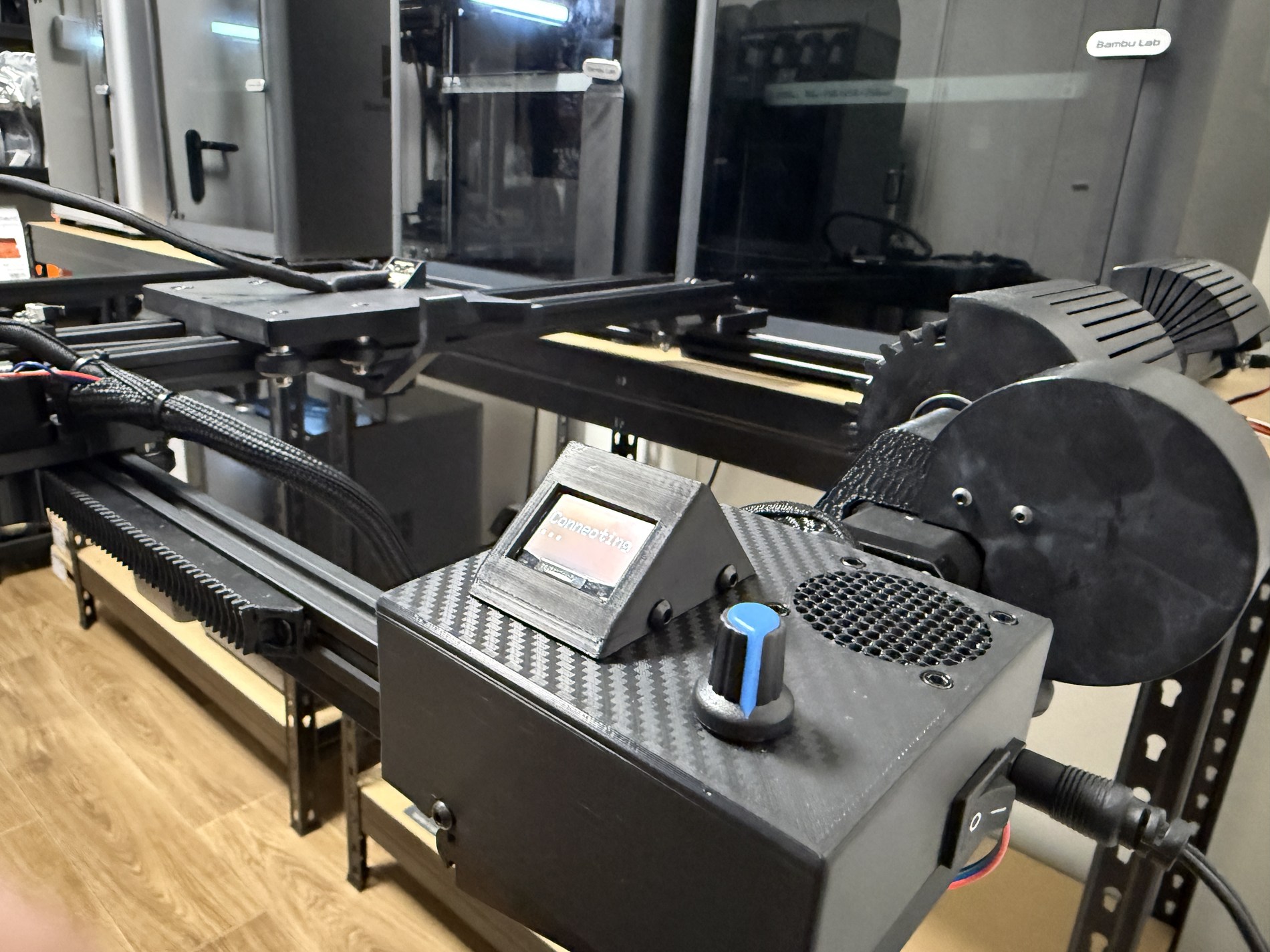
Operator interface.
The control box brought the electronics into a usable form: display, encoder input, wiring, power distribution and user interaction. The goal was to make the prototype operable as a piece of production equipment.
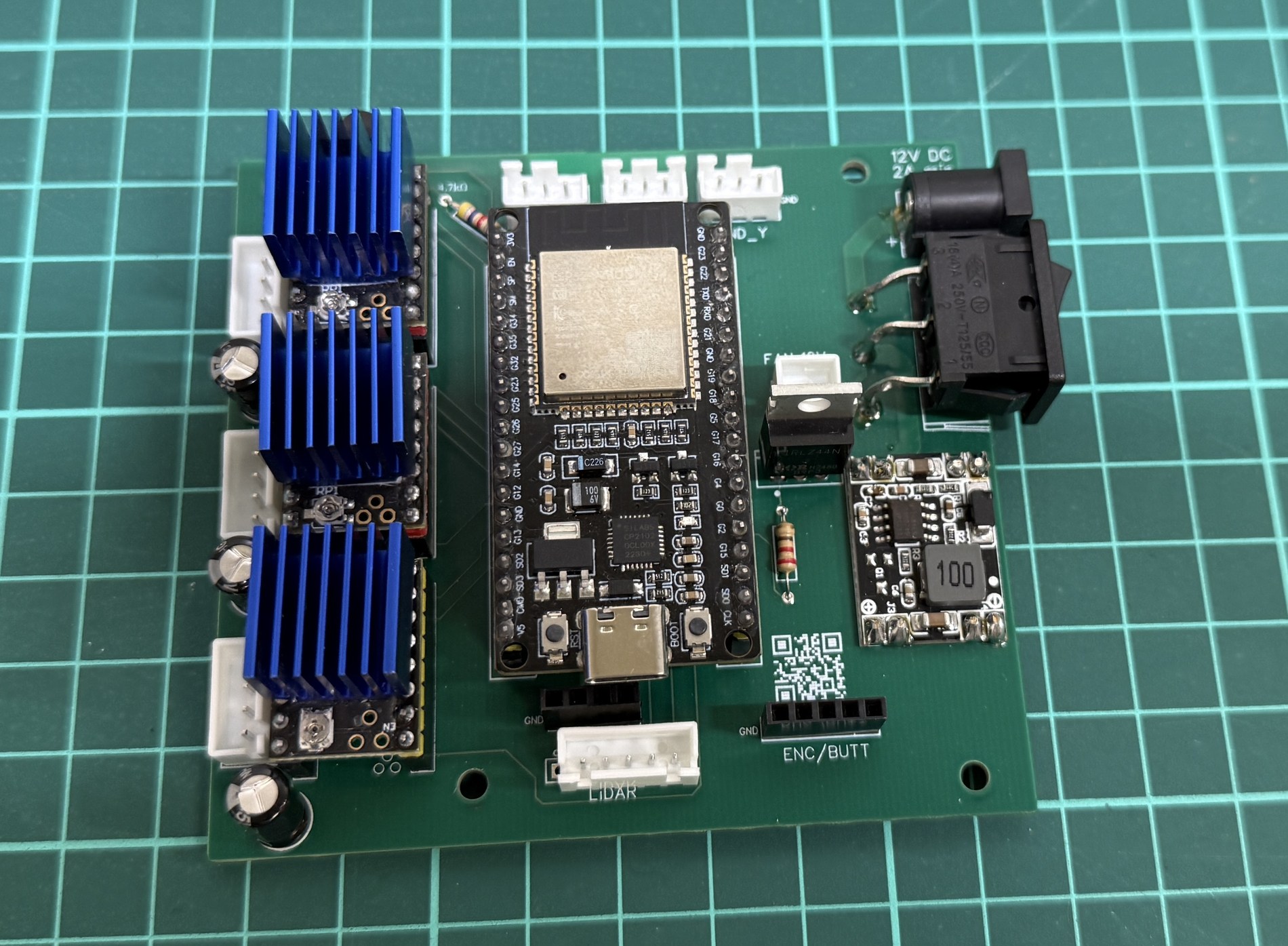
Control electronics.
The control system combined an ESP32, stepper motor drivers, NEMA17 motors, endstops, LiDAR/position sensing, OLED display, encoder input, power management and a simple web interface for remote operation.
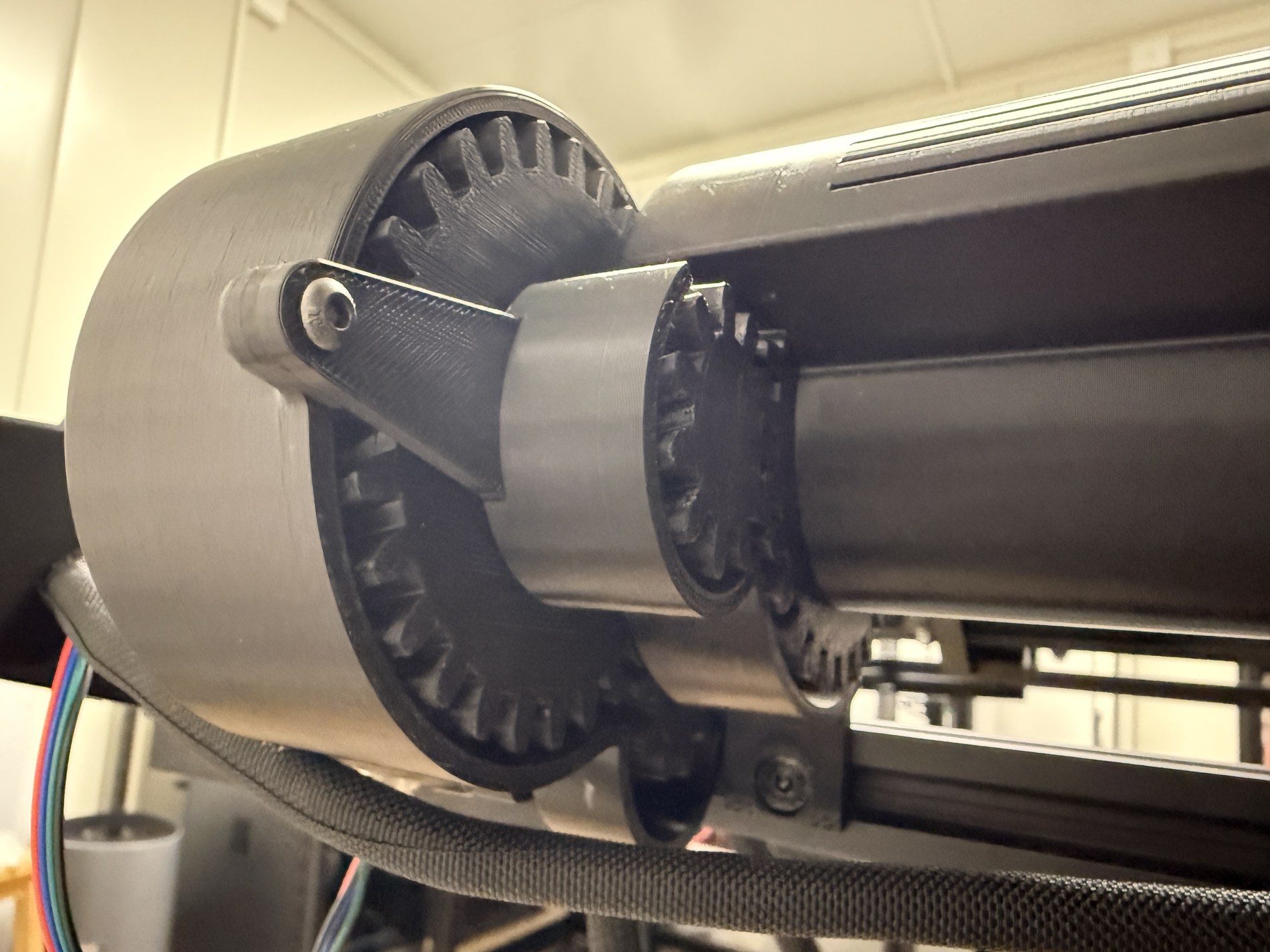
Motion and transmission.
The motion system used printed and mechanical parts together: profiles, rollers, belts/racks, mounts and custom brackets. The main challenge was getting repeatable movement while keeping the whole device low-cost and manufacturable.
Integration.
The final system combined mechanical design, electronics, firmware, calibration and documentation. It became one of my key mechatronics projects because it connects the same skills I use elsewhere: CAD, 3D printing, embedded control, wiring, testing and iteration.