Tracked robot from recycled materials.
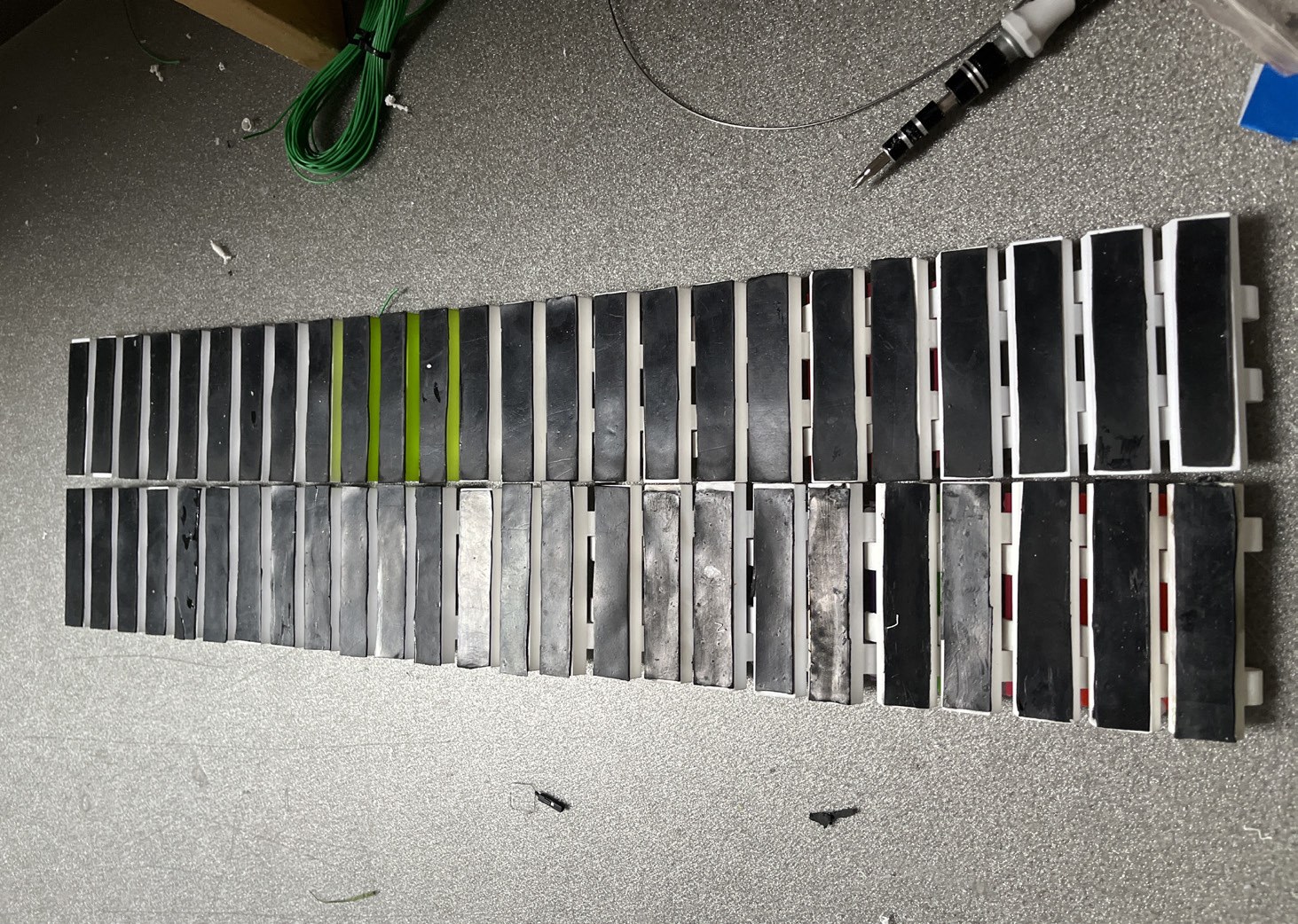
A low-budget battlebot project featured in DIYODE Magazine. I designed the chassis in Fusion 360, integrated recycled electronics, built the tracks and converted RC receiver signals through an ESP8266.
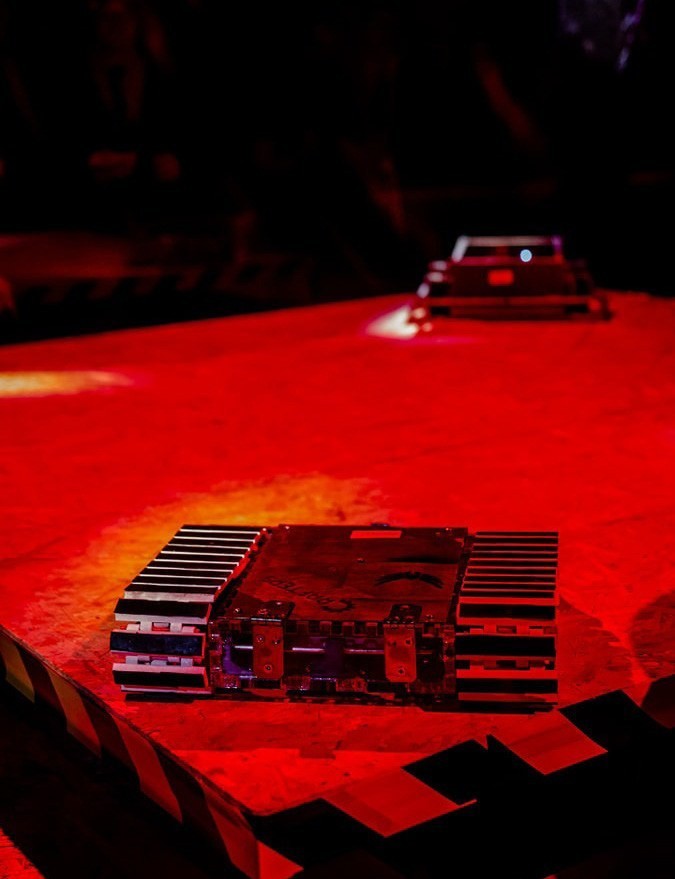
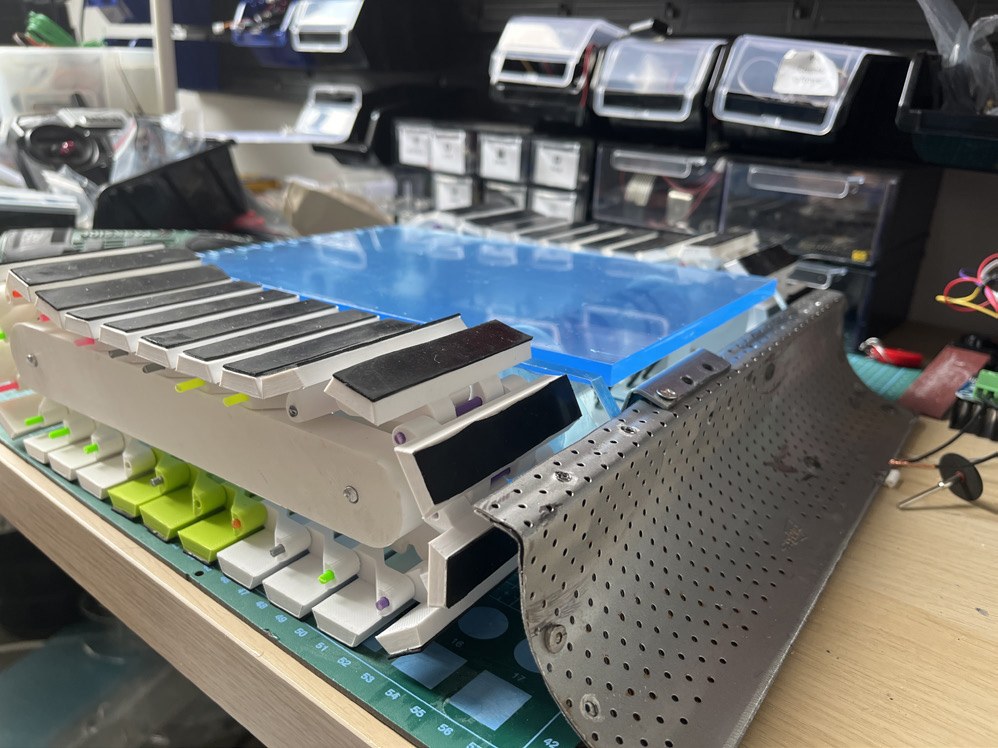
Mechanical layout.
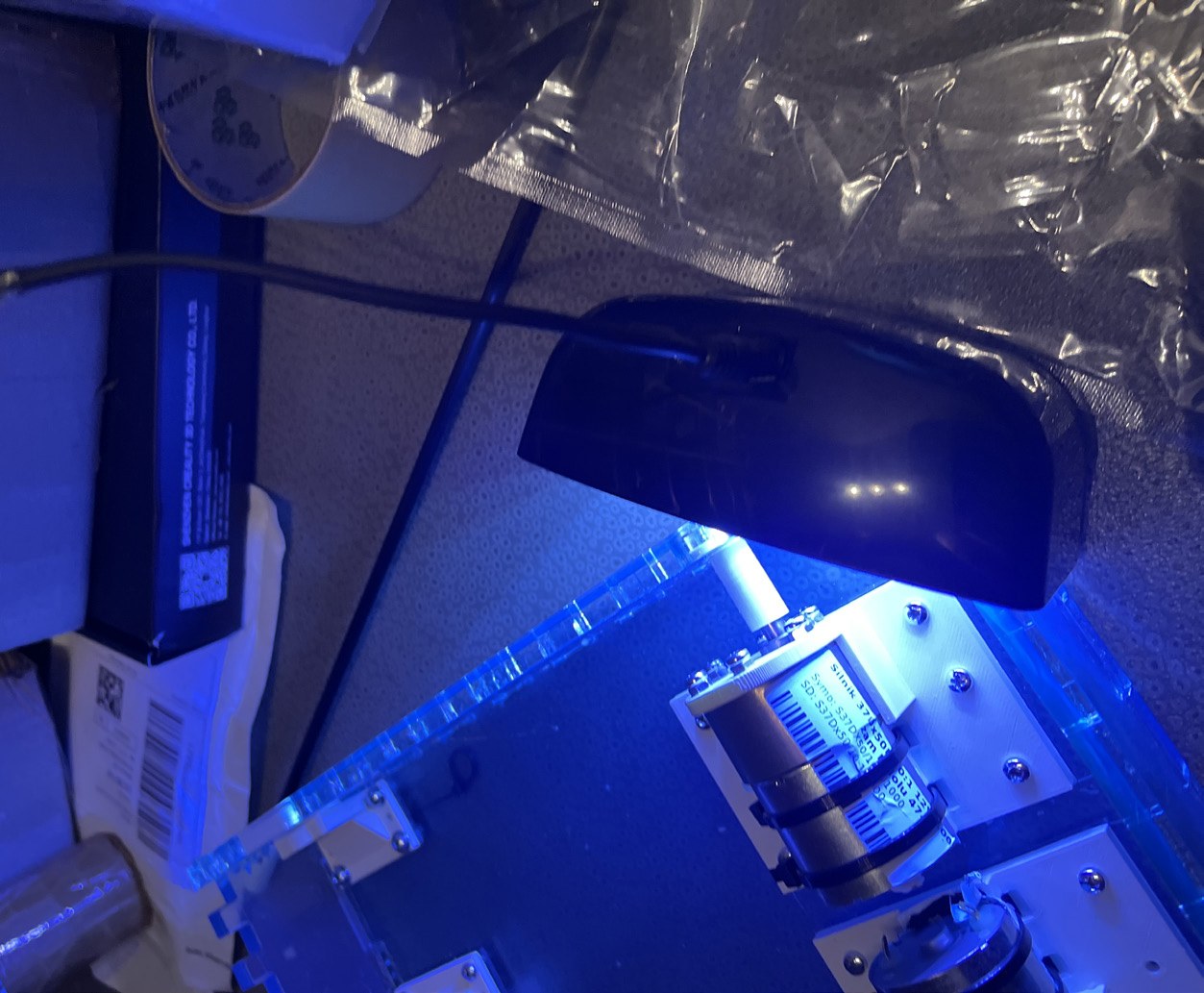
Husarz was designed as a pushing-focused battlebot rather than a spinner. The robot uses a low rectangular body, tracked drive and a wide front plough made from bent perforated sheet metal. The structure combines plexiglass panels, 3D printed parts, metal brackets and components recovered from earlier projects.
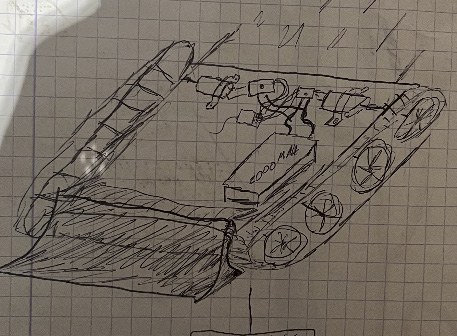
Design workflow.
I started with hand sketches, then modelled the body, motor mounts, bearing mounts and drive geometry in Fusion 360. The goal was to fit within the competition size limit while keeping the body serviceable and simple enough to manufacture with basic workshop tools.
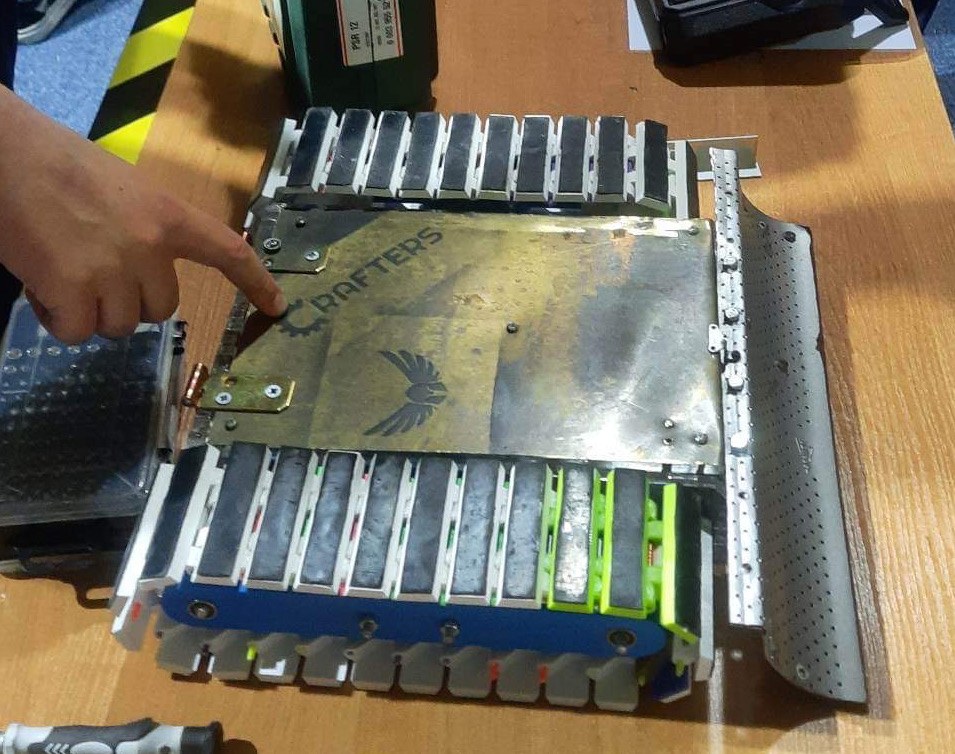
V1 to V2 revisions.
The first version exposed weak points: aluminium rods bent, 3D printed couplers broke, and the bearings needed better support. The improved version moved toward hexagonal stainless axles, stronger couplers, better bearing support and higher-torque drive considerations.
Signal conversion and motor control.
The electronics used a 3S LiPo battery, recycled IBT-2 motor controllers, DC motors and an ESP8266 Mini. The microcontroller translated radio receiver signals into controller-compatible motor commands, enabling tank-style control of the left and right tracks.
DIYODE Magazine publication.
The project was later described in an article about building a battlebot from recycled materials. It became an early example of my approach to engineering: start with limited resources, design around constraints, test quickly, and improve the weak points after real use.